About 4 mows a summer instead of 22.
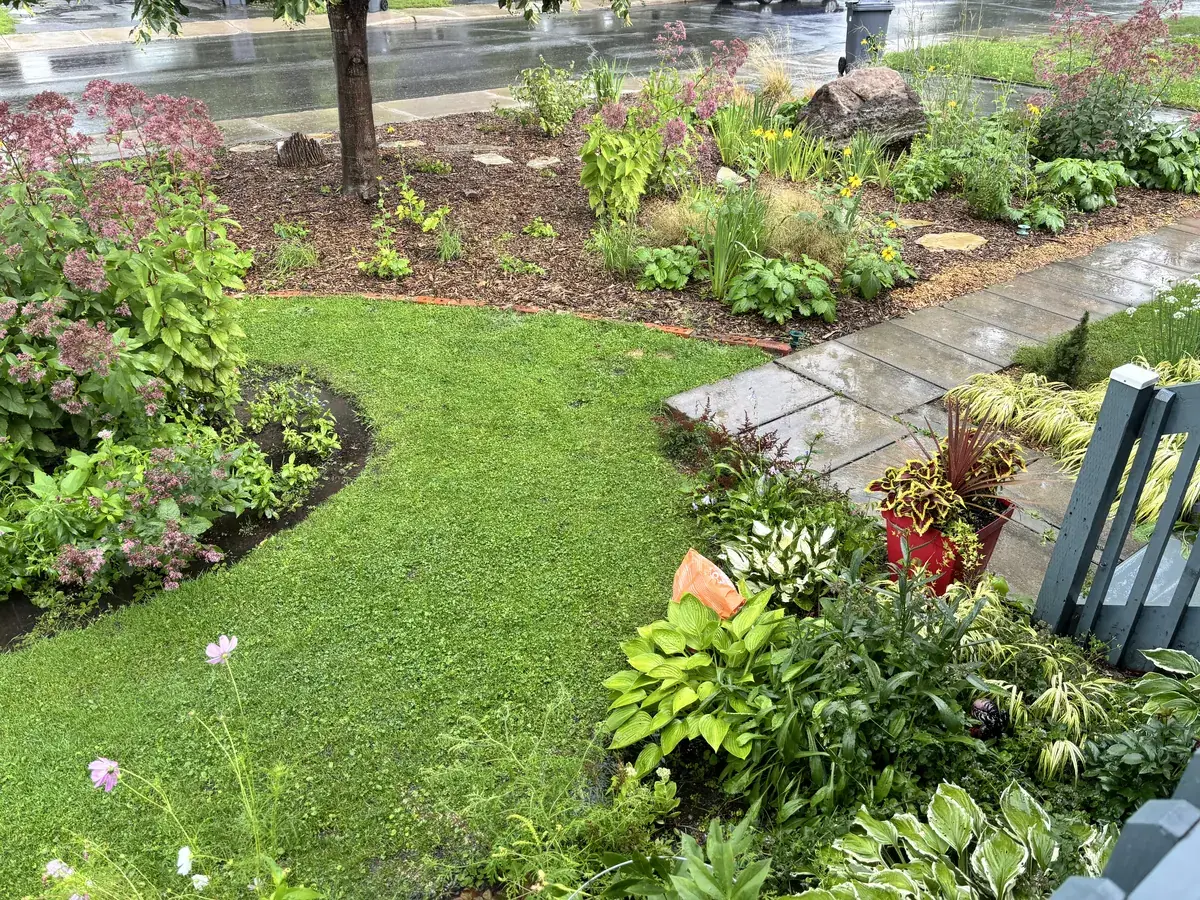
A regular lawn here wants mowing every week from mid-May to fall. A low-mow lawn needs it about every six weeks. We seed clover, fine fescues and low wildflowers into the lawn you already have, so nothing gets torn out and it still looks like a lawn.
Better for the neighbourhood.
Clover pulls nitrogen from the air and feeds the soil, so you skip the fertilizer. Fescues handle shade and get by on little water. Mowing less often lets the clover and low flowers bloom, which gives bees and butterflies food between your beds. And 18 fewer mows a summer means less gas, less noise and your Saturday mornings back.
Better for kids.
Clover is soft underfoot and stays green through dry spells, when grass goes brown. There’s nothing on it that needs keeping off. And there are four-leaf clovers to hunt: a 2017 count of 5.7 million clovers found about one in every 5,000. When the clover is in flower, bees visit it, so mow the day before a barefoot party.
What’s included.
Clover, fescue and wildflower seed worked into your grass. Two seedings, the second to thicken anything that came in thin. A six-week watering plan. A check of your town’s front-yard rules before we start. Compost top-dressing, if your soil needs it, is quoted separately.
When to do it.
Late August to September is the best window, when the soil is still warm and the rain comes back. Spring works too.
Price.
From $450 for up to 100 m².