Dorval and the West Island · Tiohtià:ke
Eco de l’OuestLow-mow lawns and eco gardens Book a consult
← All plants
Saskatoon

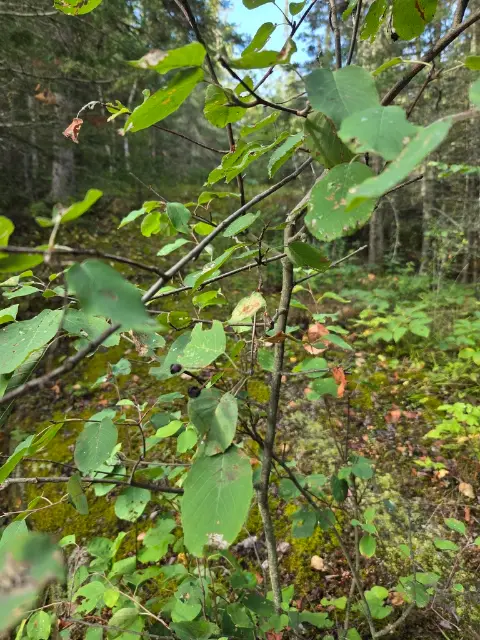
Photo: Chris Friesen, CC BY 4.0, via iNaturalist · KEEWAYWIN, ON P0V 3G0, Canada, 2026-08-16

Shrubs and vines · Native to Quebec

Saskatoon

Amelanchier alnifolia Rosaceae

Saskatoon is an upright, multi-stemmed deciduous shrub with rounded, toothed leaves. Clusters of fragrant white flowers open in spring around the time the leaves emerge, followed by small purple-blue berries in early summer. The leaves turn orange to red in autumn. 'Northline' is a fruiting selection that stays at a manageable height.

Latin
Amelanchier alnifolia
(Nutt.) Nutt. ex M. Roem. · family Rosaceae
English
Saskatoon
Northwestern serviceberry, Saskatoon serviceberry, Western serviceberry
French
Amélanchier à feuilles d'aulne
amélanchier à feuille d'aulne
Kanien'kéha (Mohawk)
Name not yet recorded
The Greenbelt Indigenous Botanical Survey species list (pages 1 to 10) has no serviceberry or Saskatoon entry. No other citable Kanien'kéha source was found.
Anishinaabemowin (Ojibwe)
gozigwaakomin
ozigwaakomin
Ojibwe People's Dictionary glosses both as 'a serviceberry' (Amelanchier spp.), so the entries cover the genus rather than this species alone; both are animate nouns (na). Ozigwaakomin is marked as a regional (BL) form. The bush itself is gozigwaakominagaawanzh or ozigwaakominaganzh.

Through the year

Saskatoon in every season.

Story

The history of saskatoon.

Saskatoon grows from Alaska across western Canada and into the western and north-central United States, in open woods, thickets and slopes from sea level to high elevations. Its fruit is eaten by birds, squirrels and bears, and deer, elk and rabbits browse the foliage. VASCAN lists it as native in Quebec, among nine provinces and territories.

The name Saskatoon comes from the Cree word misâskwatômina. The berries have long been eaten fresh or dried by Indigenous peoples in Canada, and were an ingredient in pemmican. European settlers called the genus serviceberry after a resemblance to the European Sorbus. The fruit is now an emerging horticultural crop on the Canadian prairies and in the upper Midwest.

Sources: Wikipedia: Amelanchier alnifolia · Lady Bird Johnson Wildflower Center: Amelanchier alnifolia · VASCAN: Amelanchier alnifolia

'Northline'

A Saskatoon cultivar grown for its fruit, reaching about 2 to 3 m tall. Oregon State University's landscape plants listing records its introduction in 1960; the breeder was not confirmed in the sources checked.

Characteristics

The plant at a glance.

HeightSpecies 1 to 8 m; 'Northline' about 2 to 3 m
SpreadSuckers to form a thicket over time
HabitUpright, multi-stemmed shrub
Bloom timeMay
FlowersWhite, five-petalled, 2.5 to 5 cm across, in short racemes
FoliageOval to rounded, toothed leaves; orange to red in fall
FruitPurple pome 5 to 15 mm wide, ripening in early summer
HardinessZone 2
LightFull sun to part shade; fruits best in full sun
MoistureAdaptable; avoids poorly drained or heavy clay soil
Spread behaviourSuckers, forming colonies in some forms
Native rangeAlaska across western Canada, south through the western and north-central United States; also listed in Quebec
Quebec statusNative

In the Flight Path Garden

Where it grows here.

ZonesMini-Forest
How many1
Planted2025

A single 'Northline' adds spring flowers, edible fruit for birds and people, and autumn colour to the shrub planting.

Wildlife

Who uses it.

  • The berries feed birds, squirrels and bears, and the dense growth gives shelter.
  • Host plant for orange tip and elfin butterfly caterpillars, and a spring nectar source for early pollinators.
  • Deer, elk and rabbits browse the foliage.

Sources: Lady Bird Johnson Wildflower Center: Amelanchier alnifolia · Wikipedia: Amelanchier alnifolia

Care

What to do, season by season.

Spring

Prune out dead or crossing stems before buds break. Cover the bush with netting if you want to protect blossoms from late frost damage or the later crop from birds.

Summer

Water young plants in dry spells. Harvest berries when they are fully purple, usually late June to July.

Fall

Enjoy the leaf colour and mulch the root zone. Pull or cut suckers you do not want to keep.

Winter

No protection needed. Renewal pruning of the oldest stems in late winter keeps the shrub productive.

Relations

Knowledge and use.

Indigenous peoples in Canada have long eaten the berries fresh or dried, and used them in pemmican for flavour and as a preservative. The Lady Bird Johnson Wildflower Center also records the fruit being used in soups, stews, meat dishes and dried cakes, and the shoots in making arrows and pipe stems.

Source: Wikipedia: Amelanchier alnifolia · Lady Bird Johnson Wildflower Center: Amelanchier alnifolia