Dorval and the West Island · Tiohtià:ke
Eco de l’OuestLow-mow lawns and eco gardens Book a consult
← All plants
Canada serviceberry

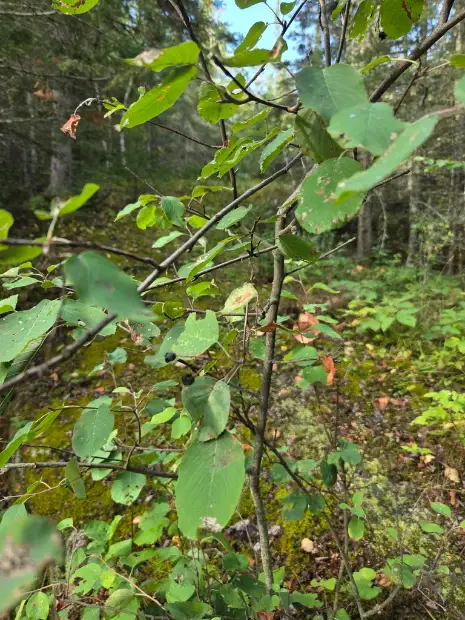
Photo: Chris Friesen, CC BY 4.0, via iNaturalist · KEEWAYWIN, ON P0V 3G0, Canada, 2026-08-16

Trees · Native to Quebec

Canada serviceberry

Amelanchier canadensis Rosaceae

Canada serviceberry is a multi-stemmed deciduous shrub or small tree with smooth grey bark, finely toothed oval leaves and a narrow crown. Loose clusters of white flowers open in early spring, before or as the leaves expand. Sweet fruits ripen from green through red and purple to nearly black in June and July. Fall brings orange to red foliage and a bare, clean-limbed winter silhouette.

Latin
Amelanchier canadensis
(L.) Medik. · family Rosaceae · also Mespilus canadensis L.
English
Canada serviceberry
eastern serviceberry, shadblow, swamp shadbush, thicket serviceberry
French
Amélanchier du Canada
amélanchier canadien
Kanien'kéha (Mohawk)
Name not yet recorded
The Greenbelt Indigenous Botanical Survey species list (145 species) has no serviceberry page, and no other citable Kanien'kéha source for this species was found.
Anishinaabemowin (Ojibwe)
ozigwaakomin
gozigwaakomin; ozigwaakominaganzh (the bush); gozigwaakominagaawanzh (the bush)
Ojibwe People's Dictionary glosses ozigwaakomin and gozigwaakomin as 'a serviceberry' (Amelanchier spp., also juneberry or saskatoon), both animate nouns. The two bush forms gloss as 'a serviceberry bush'. The entries cover the genus, not Amelanchier canadensis alone.

Through the year

Canada serviceberry in every season.

Story

The history of canada serviceberry.

Canada serviceberry is native to eastern North America, from Newfoundland west to Ontario and south to Alabama. It is largely a plant of wet sites, especially along the Atlantic coastal plain, and grows from sea level up to about 200 m. Its fruit is eaten by birds and small mammals, including cardinals, woodpeckers, robins and squirrels.

Friedrich Kasimir Medikus published the current name in 1793, and the epithet canadensis means of Canada. People have long eaten the sweet fruit and used the hard, dense, dark brown wood for fishing rods and tool handles. The genus is known by many folk names, among them juneberry, shadbush and shadblow.

Sources: Wikipedia: Amelanchier canadensis · VASCAN: Amelanchier canadensis

Characteristics

The plant at a glance.

Height2 to 6 m
Spread2 to 4 m
HabitMulti-stemmed shrub or small tree with a narrow crown
Bloom timeApril to May
FlowersWhite, in loose clusters
FoliageAlternate, egg-shaped, finely serrated leaves 2.5 to 7.5 cm long; orange to red in fall
FruitSweet, edible pomes that ripen green to red, purple, then black in June to July
HardinessZone 4
LightFull sun to part shade
MoistureMoist to wet; adapts to average garden soil
Spread behaviourClumping, with some suckering from the base
Native rangeNewfoundland to Ontario, south to Maine and Alabama
Quebec statusNative

In the Flight Path Garden

Where it grows here.

ZonesMini-Forest
How many3
Planted2023

A native understory shrub that gives early spring flowers, summer fruit for birds and fall colour, filling the shrub layer with a plant that belongs in Quebec woodland edges.

Wildlife

Who uses it.

  • The fruit is eaten by birds and small mammals, including cardinals, woodpeckers, robins and squirrels.
  • The early white flowers supply spring nectar and pollen for emerging native bees.
  • Rust leaf spot and powdery mildew can occur, but they rarely harm the plant's value for wildlife.

Sources: Wikipedia: Amelanchier canadensis

Care

What to do, season by season.

Spring

Prune out dead or crossing stems before flowering and mulch the root zone. Leave the base suckers if you want a multi-stem clump.

Summer

Water in dry spells during the first two summers. Net or share the fruit if you want some for yourself, because birds take it quickly.

Fall

Rake leaves with signs of leaf spot out of the bed. Fall colour is best in sun.

Winter

Hardy in a Montréal winter without protection. Remove the oldest stems at ground level every few years to keep the clump vigorous.

Relations

Knowledge and use.

Nothing recorded yet from a source we can cite.