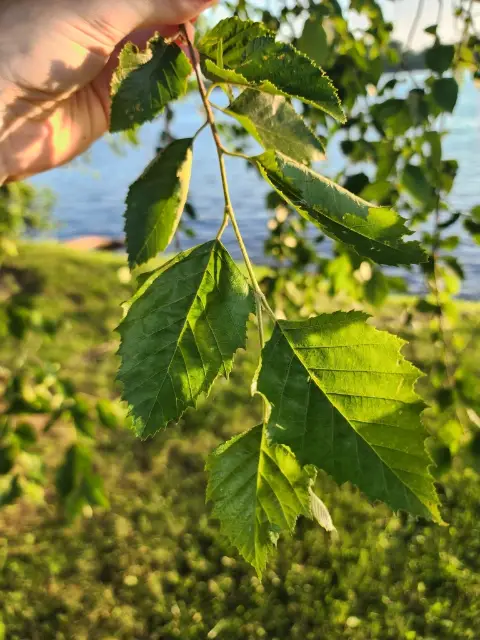
River birch grows wild along streambanks, floodplains and swamps of the eastern United States, from New Hampshire west to southern Minnesota and south to northern Florida and Texas. It tolerates flooding better than other birches and is the most heat-tolerant member of the genus. Unlike other birches, it ripens its seed in late spring or early summer. It is listed as threatened at its northern edge in New Hampshire.
Linnaeus named the species Betula nigra; the epithet nigra (black) likely refers to its darker bark compared with other birches. Indigenous peoples boiled the sap into a sweetener in the same way as maple sap. The tree became widely planted as an ornamental after the selection of the 'Heritage' form in St. Louis, which was patented in 1979 and combines pale bark with resistance to the bronze birch borer that kills many other birches in gardens.