Dorval and the West Island · Tiohtià:ke
Eco de l’OuestLow-mow lawns and eco gardens Book a consult
← All plants
Hosta

Photo: Loïc Mathieu, CC BY 4.0, via iNaturalist · Beloeil, QC J3G 4S5, Canada, 2024-06-19

Flowers and groundcovers · Introduced from northeast Asia

Hosta

Hosta (cultivars, incl. Hosta plantaginea) Asparagaceae

Hostas are clumping perennials grown mainly for broad, ribbed or puckered leaves in blue, green, gold or variegated patterns. Spikes of lavender or white bell-shaped flowers rise above the clump in summer, and those of Hosta plantaginea open fragrant in the evening in late August. The clumps die back to the ground in fall and return each spring, getting larger each year. Sizes range from small mounds to wide specimen plants.

Latin
Hosta (cultivars, incl. Hosta plantaginea)
Tratt. · family Asparagaceae · also Funkia Spreng.
English
Hosta
plantain lily; Hosta plantaginea: fragrant plantain-lily, August lily, white plantain-lily
French
Hosta
Hosta plantaginea: hosta à feuilles de plantain, lis à feuille de plantain
Kanien'kéha (Mohawk)
Name not yet recorded
Hostas are Asian garden plants and are not in the Greenbelt Indigenous Botanical Survey. No Kanien'kéha name was sought or found.
Anishinaabemowin (Ojibwe)
Name not yet recorded
Hostas are Asian garden plants and are not in the Greenbelt Indigenous Botanical Survey. No Anishinaabemowin name was found.

Through the year

Hosta in every season.

Story

The history of hosta.

Hostas are native to northeast Asia, specifically China, Japan, Korea and the Russian Far East. They grow in moist, shaded places and are valued in gardens as shade-tolerant foliage plants, hardy in zones 3 to 8 or 9.

Most of the species behind modern hostas were brought from Japan to Europe by Philipp Franz von Siebold in the mid-19th century. The genus was named by Leopold Trattinnick in 1812 for Nicholas Thomas Host, and the older name Funkia honours Heinrich Christian Funck. Hosta plantaginea, the only strongly fragrant species, is often called August lily. The American Hosta Society registers cultivars, with over 7,200 registered or reserved names.

Sources: Wikipedia: Hosta · NC State Extension Plant Toolbox: Hosta plantaginea

'Halcyon'

A frosty blue, mounded hosta about 60 cm tall and up to 1 m wide that holds its blue colour longer than many. Eric Smith bred it in Britain in the 1960s by crossing 'Tardiflora' with Hosta sieboldiana var. elegans, and it has the Royal Horticultural Society's Award of Garden Merit.

'Abiqua Drinking Gourd'

A large, thick-leaved hosta with deeply cupped blue-green leaves and white flowers in July and August. It was named Hosta of the Year in 2014 by the American Hosta Growers Association; the breeder was not confirmed in the sources checked.

'Loyalist'

A mounded hosta with nearly white leaf centres and deep green margins, described as a sport of 'Patriot'. Its originator and year were not found in the sources checked.

'Diana Remembered'

A fragrant Hosta plantaginea hybrid about 40 cm tall and 90 cm wide with shiny blue-green leaves and a wide creamy-yellow border. It was developed by J. Kulpa in 1997.
Where it comes from

How it got to Canada.

Native rangeChina, Japan, Korea and the Russian Far East

Most species behind modern hostas reached Europe from Japan through Philipp Franz von Siebold in the mid-19th century and then spread through European and North American horticulture as shade-garden perennials. VASCAN records Hosta plantaginea as introduced in Quebec, citing Marie-Victorin (1995). Hostas are widely grown garden plants in Montréal; the sources checked did not list them as invasive in Quebec.

Sources: Wikipedia: Hosta · VASCAN: Hosta plantaginea

Characteristics

The plant at a glance.

Height30 to 60 cm for most cultivars here; 'Halcyon' about 60 cm
Spread60 to 120 cm; Hosta plantaginea 90 to 100 cm
HabitDense mounded clump
Bloom timeJuly to September; Hosta plantaginea from late August
FlowersPendulous lavender or white bells; H. plantaginea has fragrant white flowers up to 10 cm long that open in the evening
FoliageBroad leaves from green to glaucous blue, gold or variegated, smooth to puckered
FruitDry capsules with black seed
HardinessZones 3 to 8 (H. plantaginea zones 3 to 9)
LightPart shade to shade; H. plantaginea tolerates more sun
MoistureMoist, well-drained, organic soil
Spread behaviourClumping; slowly enlarging
Native rangeChina, Japan, Korea and the Russian Far East
Quebec statusNot native, cultivated

In the Flight Path Garden

Where it grows here.

ZonesHügelkultur Garden · Ornamental Border, Full Sun · Ornamental Border, Partial Sun · Back Ornamental Border
How many12
Planted2023

In the Hügelkultur Garden, both front borders and the back Ornamental Border, hostas supply bold foliage and fragrant late-summer flowers in the shadier spots where few flowering plants perform.

Wildlife

Who uses it.

  • The flowers attract hummingbirds, bees and butterflies; those of Hosta plantaginea open in the evening.
  • Deer and rabbits browse the leaves and stems, slugs and snails chew them, and voles eat the roots.
  • All parts of the plant are toxic to cats, dogs and horses.

Sources: NC State Extension Plant Toolbox: Hosta plantaginea · Wikipedia: Hosta

Care

What to do, season by season.

Spring

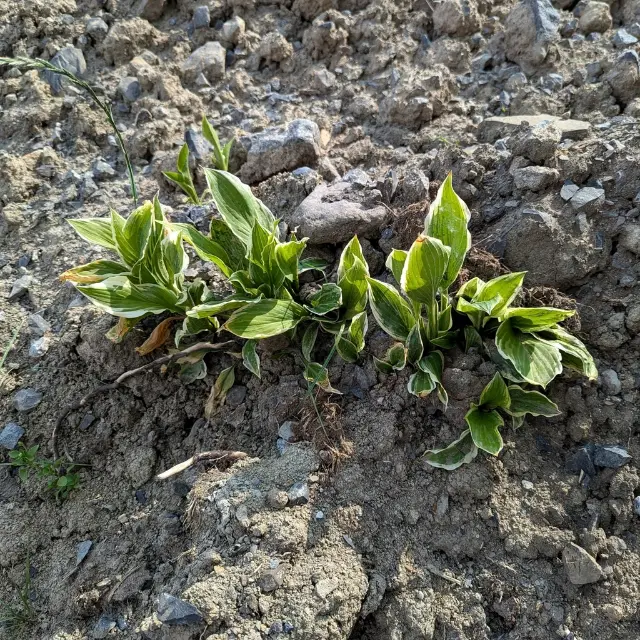
New leaves emerge in April or May. Divide crowded clumps and mulch with compost, and set slug controls early on thick-leaved cultivars.

Summer

Water during dry spells, since leaf edges scorch in drought and sun. Remove flower stalks after bloom if you prefer a tidy mound.

Fall

The foliage yellows after frost. Cut it back and clear it away to reduce slug eggs overwintering.

Winter

No protection needed once established.

Relations

Knowledge and use.

Nothing recorded yet from a source we can cite.