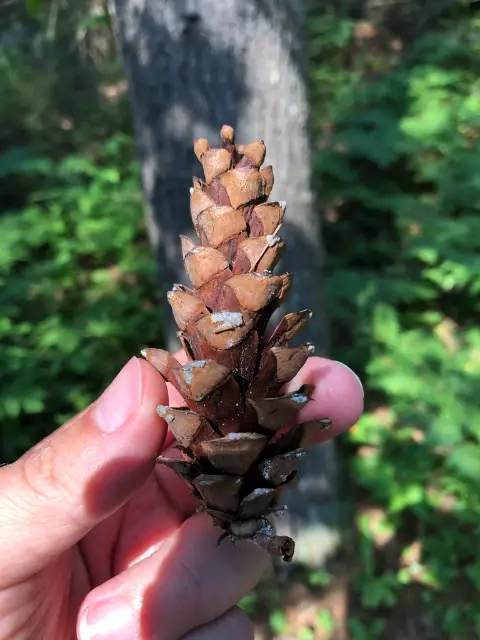
White pine grows from Newfoundland to Manitoba and south through the Appalachians, and was once a dominant tree of the forests of southern Quebec and the Ottawa Valley. It favours sandy, well-drained, acidic soils and resists fire well, so surviving mature trees often reseed burned ground. Old-growth stands once covered much of northeastern North America, but intensive logging from the 1700s to the 1900s left only about 1 percent of them. An introduced fungus, white pine blister rust, which needs currants and gooseberries as alternate hosts, killed a large share of mature trees in the early twentieth century.
The English and French name Weymouth pine is tied to Captain George Weymouth, associated with bringing the tree to England in the early 1600s. Its tall straight trunks made ideal ship masts, and colonial authorities marked the best trees with the broad arrow to reserve them for the British navy, a policy that led to the Pine Tree Riot of 1772. White pine then supplied much of the lumber of the eastern North American timber trade until the virgin forests were cut.