Dorval and the West Island · Tiohtià:ke
Eco de l’OuestLow-mow lawns and eco gardens Book a consult
← All plants
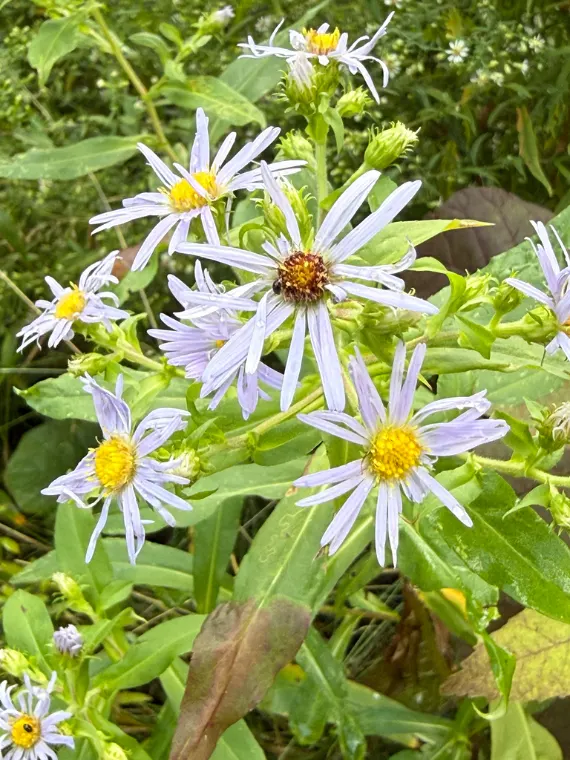
Purple-stemmed aster

Photo: Patrice Dupont, CC BY 4.0, via iNaturalist · Ch du Camping, Orford, QC, CA, 2026-09-08

Flowers and groundcovers · Native to Quebec

Purple-stemmed aster

Symphyotrichum puniceum Asteraceae

Purple-stemmed aster is a tall perennial with stout, often zigzag stems that are usually reddish purple and bristly. Its rough, narrow leaves clasp the stem at the base. From late summer into fall it carries loose sprays of flower heads about 2.5 cm across, with 30 to 50 pale blue to violet rays around a yellow centre that turns purple with age. Fluffy, wind-carried seed heads follow, and the stems stand into winter.

Latin
Symphyotrichum puniceum
(L.) Á. Löve & D. Löve · family Asteraceae · also Aster puniceus L.
English
Purple-stemmed aster
swamp aster, red-stemmed aster, bristly aster, bog aster
French
Aster ponceau
Kanien'kéha (Mohawk)
Name not yet recorded
No Kanien'kéha name was found. The Greenbelt Indigenous Botanical Survey page for purple-stemmed aster could not be reached, and searches found no other citable source.
Anishinaabemowin (Ojibwe)
Name not yet recorded
The Ojibwe People's Dictionary search for 'aster' returned no results. Densmore (1928) records Chippewa use of this plant, but no Anishinaabemowin name for it was found in the sources checked.

Through the year

Purple-stemmed aster in every season.

Story

The history of purple-stemmed aster.

Purple-stemmed aster grows in wet places: pond margins, marshes, shrub swamps, fens, wet thickets, ditches and moist meadows. It ranges from the edge of the Great Plains to the Atlantic coast and from the Gulf coast of Texas north to southern Ungava Bay in Quebec, and it is native in Quebec. It is a wetland obligate, and its late flowers feed many bees, including specialist mining bees that collect pollen only from asters.

Linnaeus first named the plant Aster puniceus. The species name is Latin for crimson or reddish purple and refers to the colour of the stems. The Icelandic botanists Áskell and Doris Löve later moved it to the genus Symphyotrichum, where most North American asters are now placed. Botanists have named many forms of this variable plant.

Sources: Wikipedia: Symphyotrichum puniceum · Ontario Wildflowers: Purple-stemmed Aster · Go Botany: Symphyotrichum puniceum · Putnam Park Wildflowers (UW–Eau Claire): Symphyotrichum puniceum · Illinois Wildflowers: Swamp Aster · VASCAN: Symphyotrichum puniceum

Characteristics

The plant at a glance.

Height60 to 180 cm
Spread60 to 90 cm
HabitUpright, clumping perennial with stout, often zigzag stems
Bloom timeAugust to October
FlowersHeads about 2.5 cm across, 30 to 50 pale blue to violet rays, yellow centre turning purple
FoliageAlternate, narrow, rough leaves that clasp the stem; stems usually reddish purple and bristly
FruitSmall hairy seeds with white bristly plumes, carried by wind
HardinessZone 3
LightFull sun to part shade
MoistureMoist to wet
Spread behaviourClumping with short rhizomes; self-sows by wind-borne seed
Native rangeGreat Plains to the Atlantic, Gulf coast of Texas north to southern Ungava Bay
Quebec statusNative

In the Flight Path Garden

Where it grows here.

ZonesOrnamental Border, Full Sun · Ornamental Border, Partial Sun · St. Lawrence Lowlands Demonstration Garden · Meadow and Alternative Lawn Bed · Mini-Forest · Rain Garden #1 · Rain Garden #2 · Hügelkultur Garden · Back Ornamental Border · St. Lawrence Lowlands Eco Mix Lawn
How many45
Planted2026

Planted in every bed of the garden, it adds tall violet flowers from August into October, when most of the garden is finishing. It does best in wetter spots such as the rain gardens, where it takes soggier soil than the New England aster already growing here.

Wildlife

Who uses it.

  • Flowers draw honey bees, bumble bees, wasps, flies, butterflies, skippers and moths, and the Xerces Society rates it of special value to native bees.
  • The aster mining bees Andrena asteris and Andrena hirticincta collect its pollen, and pearl crescent and silvery checkerspot caterpillars feed on asters.
  • White-tailed deer and cottontail rabbits browse the leaves, and wild turkeys sometimes eat the seeds and foliage.

Sources: Illinois Wildflowers: Swamp Aster · Lady Bird Johnson Wildflower Center: Symphyotrichum puniceum

Care

What to do, season by season.

Spring

Cut last year's stems to the ground as new shoots appear. Divide crowded clumps in early spring if needed.

Summer

Keep the soil moist; in drought the lower leaves brown and drop. Tall stems may lean in rich soil, so let neighbouring plants hold them up.

Fall

Enjoy the late flowers and leave the seed heads for birds and for natural reseeding. Worn or spotted leaves at season's end are normal.

Winter

Leave the stems standing as shelter for overwintering insects and cut them back in early spring.

Relations

Knowledge and use.

Frances Densmore recorded in 1928 that the Chippewa (Ojibwe) smoked this plant as a hunting aid, and later accounts describe the root being smoked with tobacco to attract game. The Woodland Cree and the Haudenosaunee (Iroquois) are recorded as using the roots in traditional remedies.

Source: Putnam Park Wildflowers (UW–Eau Claire): Symphyotrichum puniceum · Wikipedia: Symphyotrichum puniceum