Dorval and the West Island · Tiohtià:ke
Eco de l’OuestLow-mow lawns and eco gardens Book a consult
← All plants
Tall meadow-rue

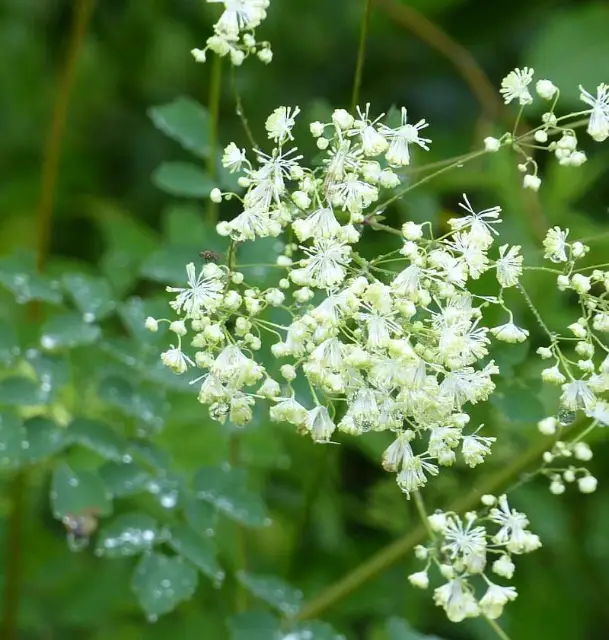
Photo: christine123, CC BY 4.0, via iNaturalist · Larose Forest. Clarence-Rockland, ON, Canada, 2017-07-01

Flowers and groundcovers · Native to Quebec

Tall meadow-rue

Thalictrum pubescens Ranunculaceae

Tall meadow-rue is a stately perennial with hollow green stems and airy, blue-green compound leaves with rounded-lobed leaflets. Billowing plumes of small creamy white flowers with showy stamens open in summer. It forms a tall back-of-the-bed screen in moist soil. The foliage stays attractive from spring until the stems die back in fall.

Latin
Thalictrum pubescens
Pursh · family Ranunculaceae · also Thalictrum polygamum Muhl.
English
Tall meadow-rue
king of the meadow, late meadow-rue, pubescent meadow-rue, muskrat-weed, meadow-weed
French
Pigamon pubescent
Kanien'kéha (Mohawk)
Name not yet recorded
The Greenbelt Indigenous Botanical Survey has no meadow-rue species page that could be found by search, and no other citable Kanien'kéha name for this species was found.
Anishinaabemowin (Ojibwe)
Name not yet recorded
Searches of the Ojibwe People's Dictionary for 'meadow rue' returned only unrelated place terms about meadows, and no citable Anishinaabemowin name for this species was found.

Through the year

Tall meadow-rue in every season.

Story

The history of tall meadow-rue.

Tall meadow-rue grows in meadows, low thickets and swamps across eastern Canada and the eastern United States, from Newfoundland to Ontario and south to Georgia and Mississippi. VASCAN lists it as native in Quebec, and NatureServe assesses it as secure. Its summer flowers are constantly visited by bees and butterflies.

It was described by Frederick Pursh, and older botanical literature often uses the name Thalictrum polygamum. The common name king of the meadow reflects its height in wet meadows.

Sources: VASCAN: Thalictrum pubescens · Wikipedia: Thalictrum pubescens · Lady Bird Johnson Wildflower Center: Thalictrum pubescens

Characteristics

The plant at a glance.

Height1 to 2.5 m; up to 3 m in rich wet soil
Spread60 to 90 cm
HabitTall, upright clumping perennial with hollow stems
Bloom timeJune to August
FlowersPlumes of small creamy white flowers with prominent stamens
FoliageBlue-green (glaucous) pinnately compound leaves with rounded-lobed leaflets
FruitSmall dry achenes
HardinessZone 3
LightPart shade preferred
MoistureMoist to wet; acidic to neutral soil
Spread behaviourClumping; produces offsets and some seedlings
Native rangeEastern Canada and eastern United States, from Newfoundland to Ontario and south to Georgia and Mississippi
Quebec statusNative

In the Flight Path Garden

Where it grows here.

ZonesRain Garden #2
How many45
Planted2025

Its height and moisture tolerance make it a pollinator-friendly back layer in Rain Garden #2, and forty-five plants form a soft summer screen.

Wildlife

Who uses it.

  • Flowers are constantly visited by bees and butterflies.
  • Flat flower plumes offer abundant pollen to native bees.
  • Tall stems give cover to small insects and birds in wet meadow plantings.

Sources: Lady Bird Johnson Wildflower Center: Thalictrum pubescens

Care

What to do, season by season.

Spring

Divide offsets in spring as growth starts. Mulch lightly to hold moisture.

Summer

Keep the soil moist. Stake or plant among sturdy neighbours if the plants flop in wind.

Fall

Leave stems standing for insects and winter structure. Seeds can be sown fresh, though germination can take two years.

Winter

No protection is needed. Cut stems back in early spring.

Relations

Knowledge and use.

Nothing recorded yet from a source we can cite.