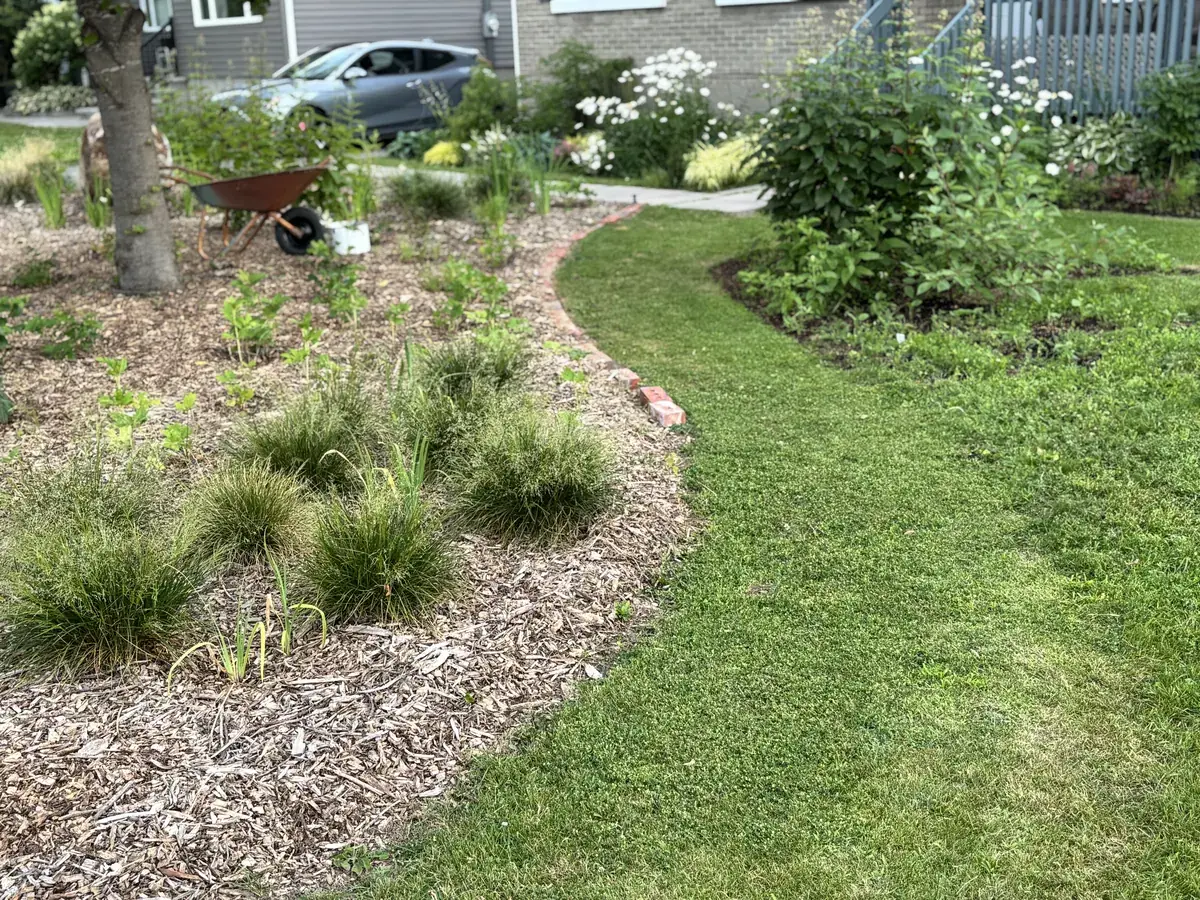
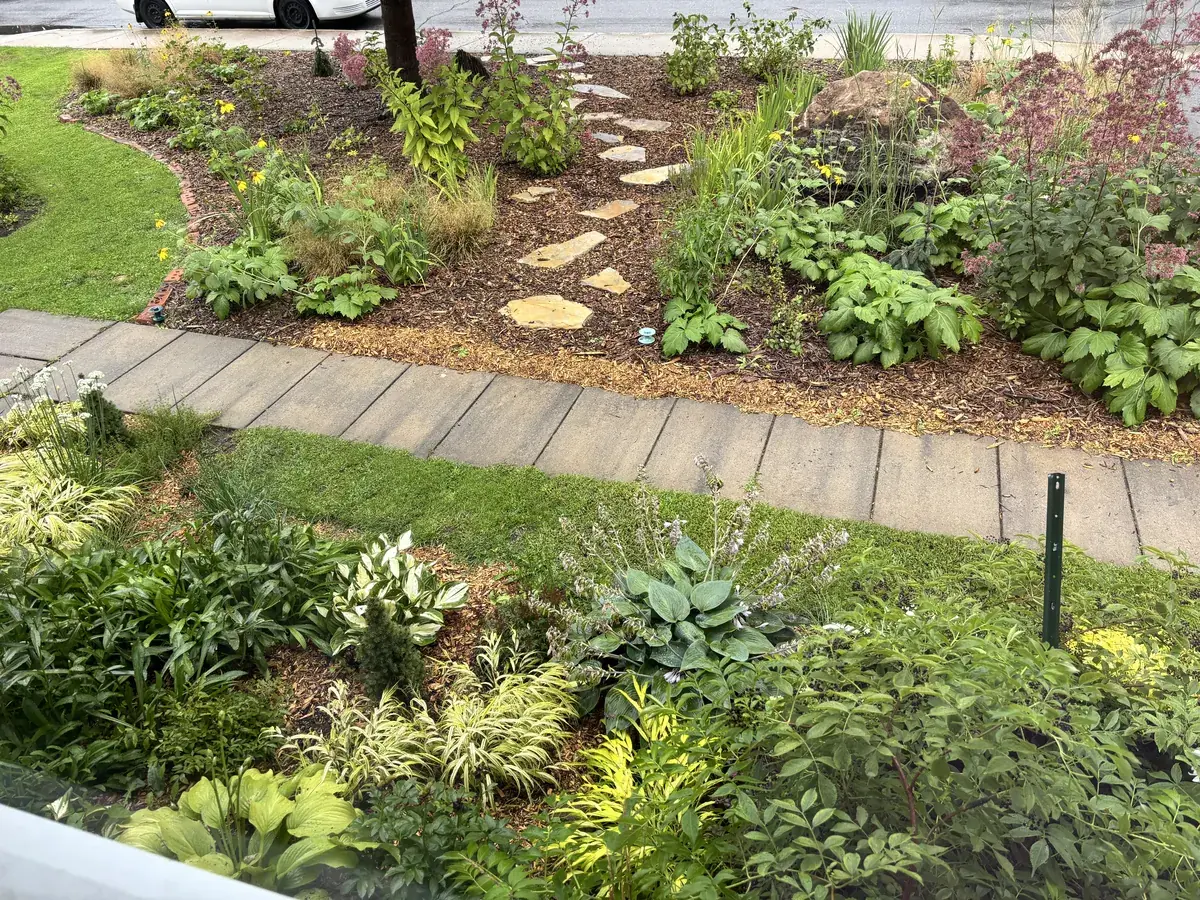
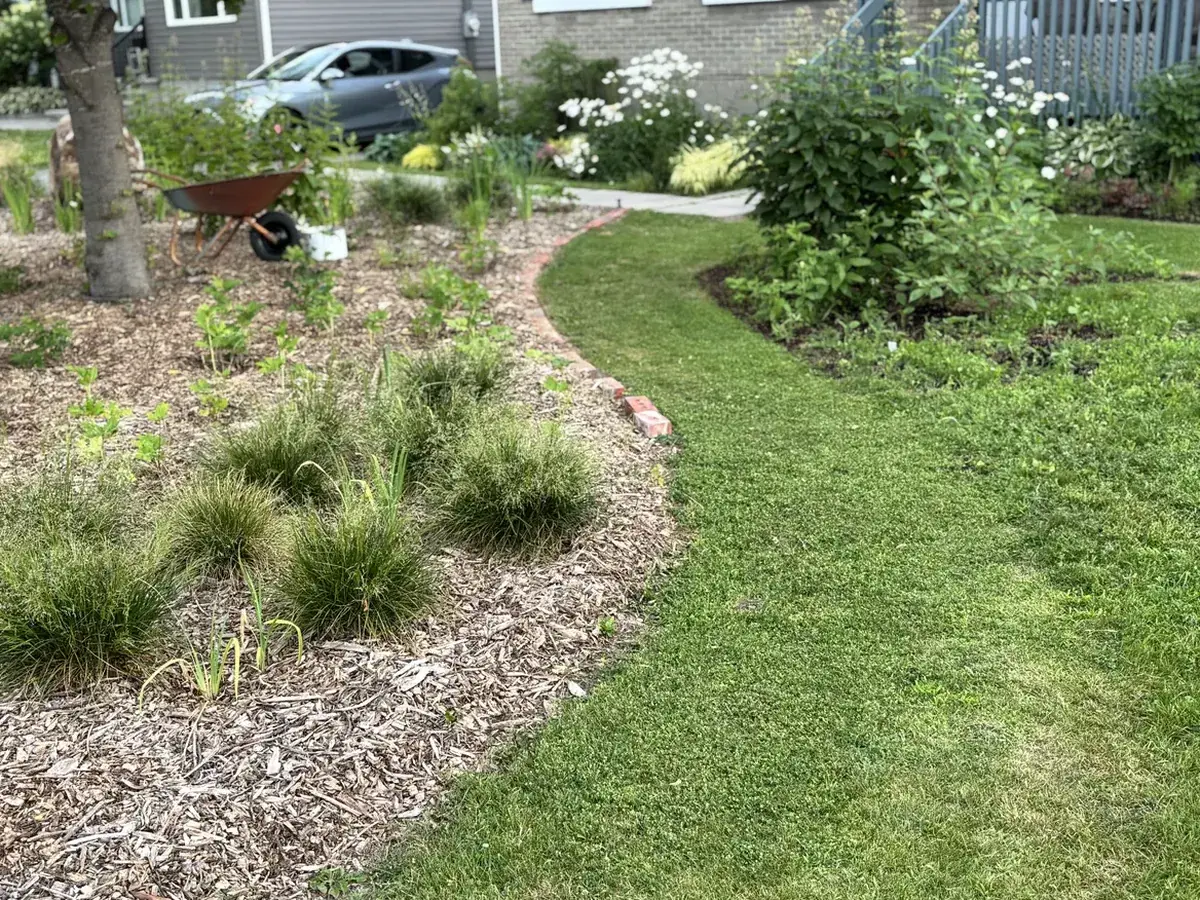
Why we seed into your lawn instead of tearing it out.
A low-mow lawn starts with the grass you already have. Here is how overseeding with clover, trefoil, yarrow and fescues works, and when to do it.
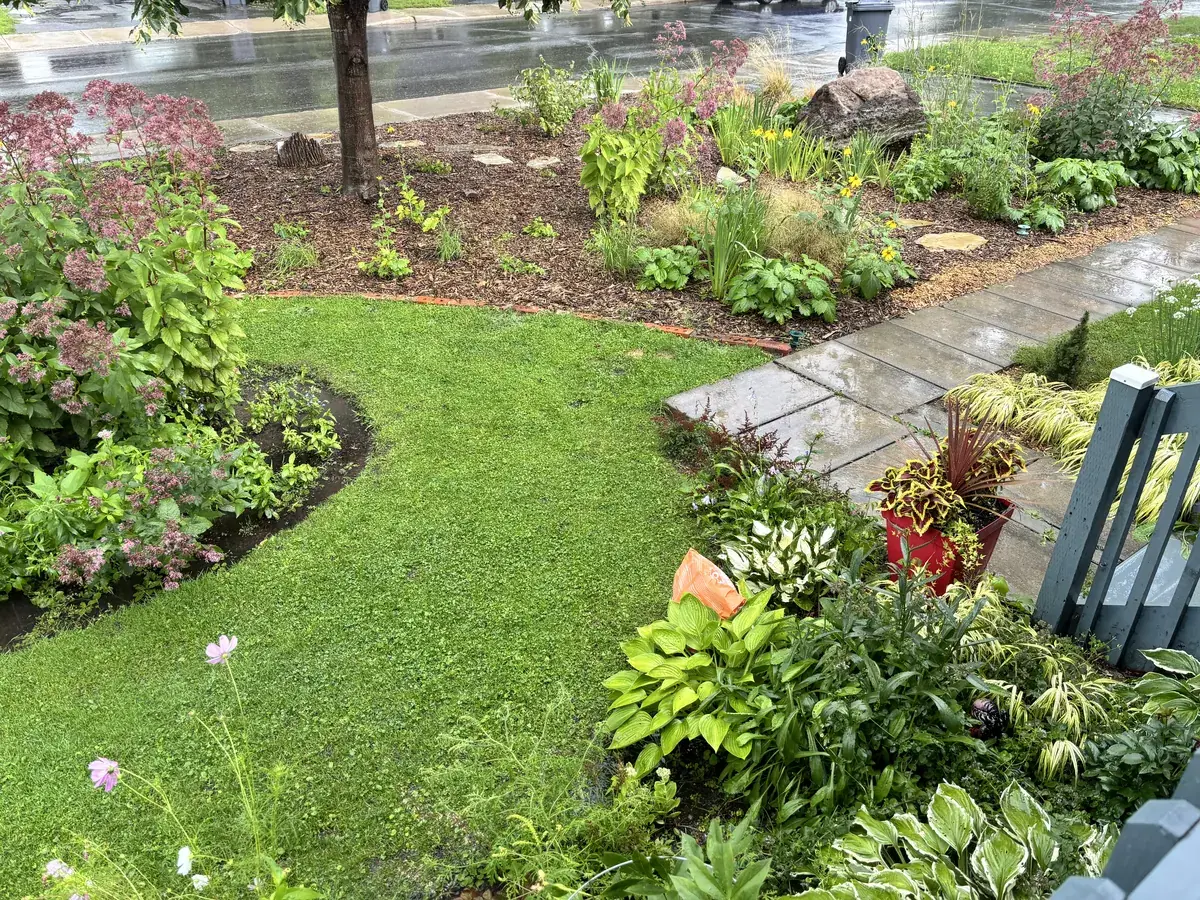
Most people picture a lawn makeover as stripping the sod and starting again. We almost never do that. Your existing lawn is already holding the soil, already rooted, and already green. We would rather add to it than throw it away.
What we actually do.
We cut the lawn low and seed a mix chosen for your yard directly into it. In sun that is usually our suburban mix of bird’s-foot trefoil, white clover and yarrow; in shade, a fine-fescue or shade grass mix. The new plants come up between the grass and fill the gaps. A second seeding follows to thicken anything that came in thin. Both seedings are included in the price.
Why a mixed lawn works better.
A lawn of one kind of grass struggles the moment conditions change. A mixed lawn spreads the risk. Clover and trefoil stay green in dry spells and feed the soil with nitrogen, so you can skip the fertilizer. They are the plants most lawn services try to kill. We put them back. Fescues handle shade and need little water. The low flowers give bees and other pollinators something to use between your beds.
Once it settles in, a lawn like this needs mowing about every six weeks. It still looks like a lawn, and you can still walk, sit and play on it.
When to do it.
The best window is late August to September, when the soil is still warm and the rain comes back. Spring works too. After seeding we give you a six-week watering plan, because the first weeks decide how well the seed takes. If your soil is thin or compacted, we may suggest a compost top-dressing, which we quote separately.
Low-mow lawns start at $450 for up to 100 m². The estimator on our plans page gives you a range for your own yard in a few seconds.