Leave your garden standing this winter because native bees are sleeping in the stems.
Leave your perennials standing until spring. The stems shelter native bees through the winter, hold snow over the roots and feed birds, so the fall job list is shorter than you think.
Don’t cut your perennials back this fall. Leave the stems, seed heads and fallen leaves in your beds until spring, because native bees and other insects spend the winter in them and the snow they catch protects the roots. The only plants to cut now are diseased ones and anything blocking a path.
Cutting everything back in fall is a habit, not a rule.
Many of us learned to clear the beds every October so the garden looked finished before the snow. It is a tidy habit, and it costs the garden more than it gives. Espace pour la vie, the City of Montréal’s group of nature museums that includes the Botanical Garden, says that removing perennial stems and leaves in the fall is neither necessary nor even desirable. The habit also makes work: bags of stems and leaves at the curb in the fall, and bare soil in the spring that weeds find first.
Bees, beetles and butterflies spend the winter in your garden.
A garden in November looks empty, but it is full of insects waiting for spring. Small stem-nesting bees, such as small carpenter bees, masked bees and leafcutter bees, raise their young inside hollow or pithy stems. Native ladybugs shelter in the leaf litter, and some butterflies spend the winter as eggs or chrysalises fixed to old stems.
According to NC State Extension, about a quarter of native bees nest in cavities such as plant stems and wood. Most of the rest nest in the ground. That is another reason to leave the leaves on your beds instead of raking down to bare soil.
Standing stems also protect your plants.
Stems catch the snow, and snow is good insulation. It keeps the crowns and roots of your perennials at a steadier temperature through Montréal’s freeze and thaw. The seed heads feed birds through December, long after the flowers are gone.
What to cut, and what to leave.
The list of things to cut is short. Cut any plant that had disease or pest problems this year, and keep it out of your own compost. Cut back anything that leans over a path or the sidewalk. Leave everything else: stems, seed heads, grasses, and the leaves that fall on the beds. Our own November job list has three lines on it: leave the stems, leave the leaves on the beds, and cut only what is diseased.
In spring, cut the stems high and leave them in the bed.
Wait until the days are reliably warm, usually late April to May in Montréal, before you tidy. Then cut the old stems back to between 20 and 60 cm. The stubs become nest sites for this year’s bees, and new growth hides them within a few weeks. Chop the tops you cut and drop them at the base of the plants, as Espace pour la vie suggests.
What this looks like in the Flight Path Garden.
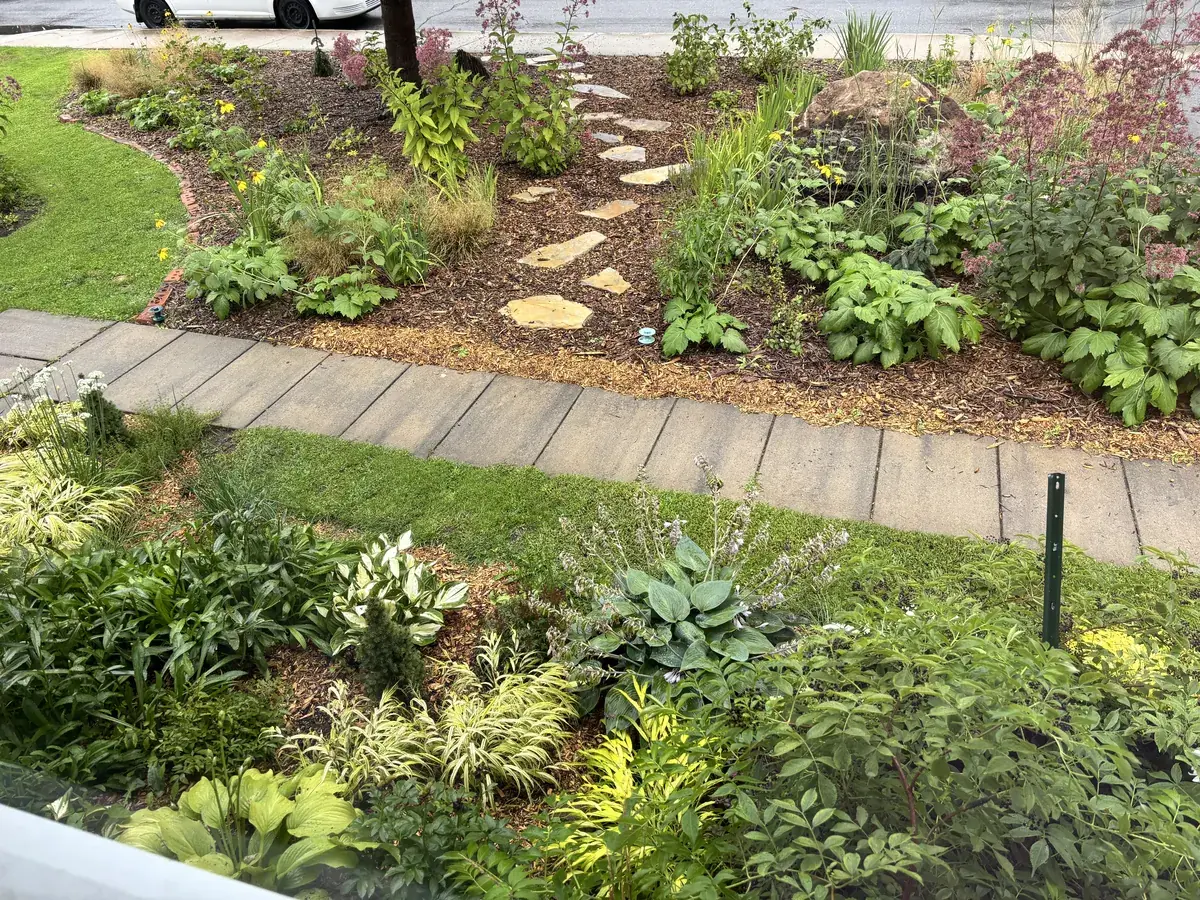
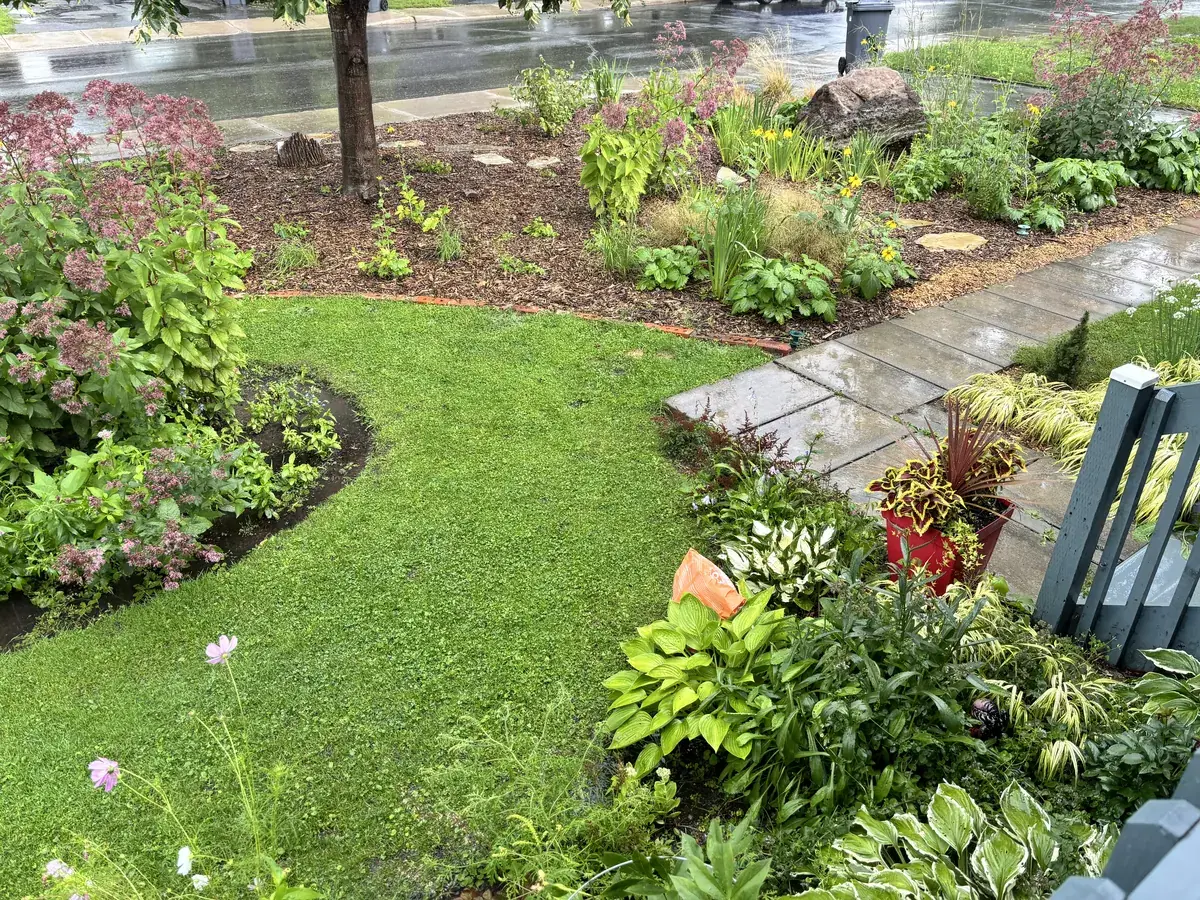
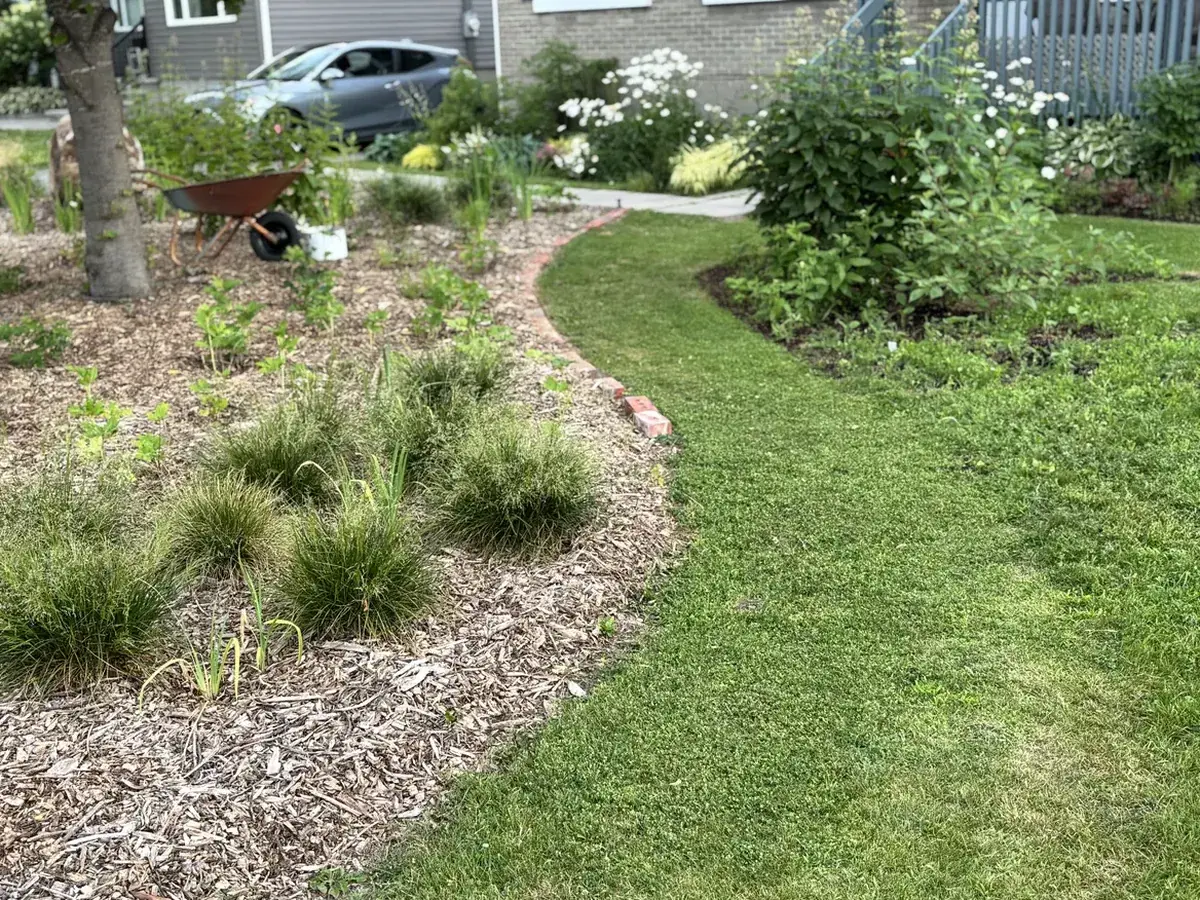
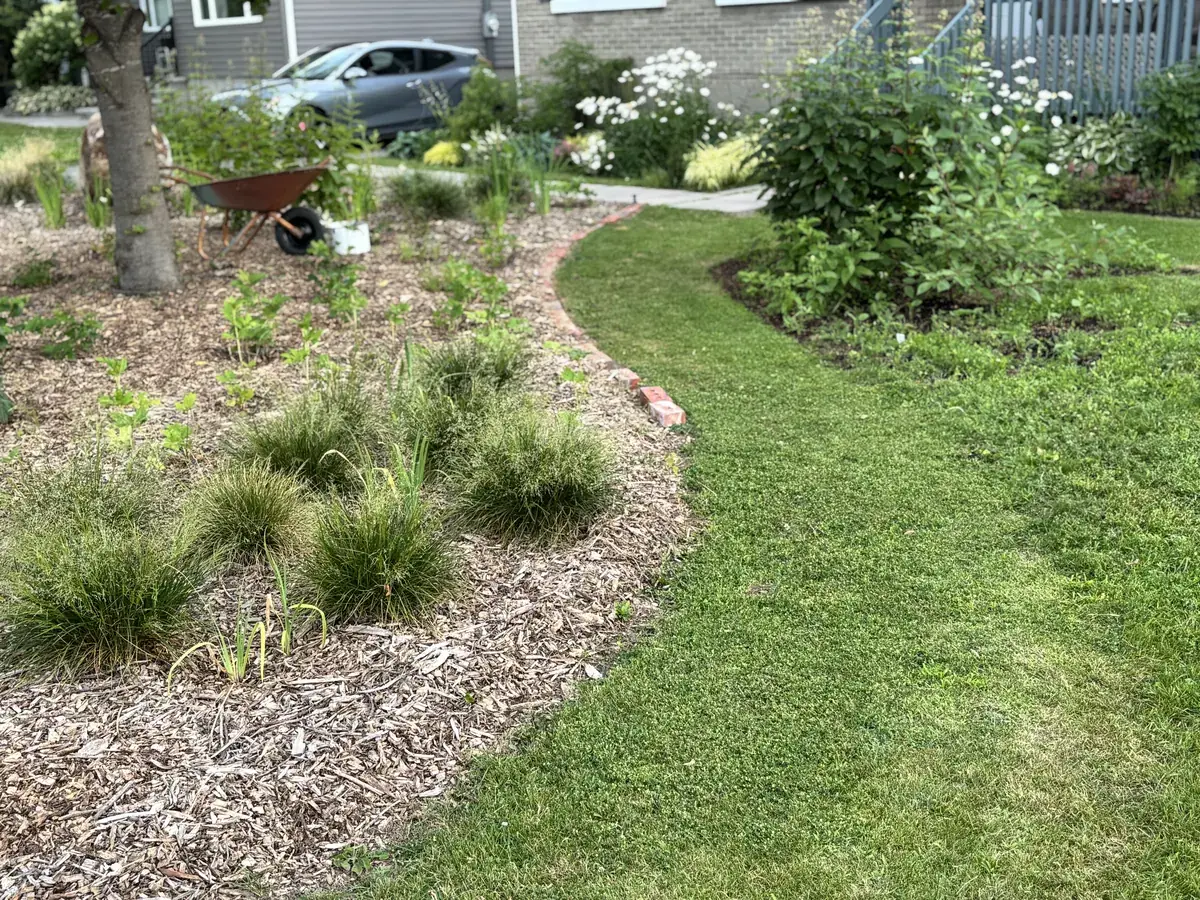
This is the first winter for our front garden. In May 2026 we planted 380 plants of 41 native species through wood chips where the lawn used to be, and this fall we are leaving all of it standing. The cut-leaved coneflower keeps its tall, pithy stems, and the tufted hairgrass holds the snow. Out back, the purple-stemmed aster and flat-topped white aster in our rain garden keep their seed heads for the birds.
A standing garden can look neglected from the street if nothing frames it. A planted edge along the sidewalk and a clear path tell the neighbours that the garden is cared for, even in February. For more on the bees themselves, the Xerces Society’s Save the stems brochure is a good short read.
If you would like help deciding what to leave and what to cut in your own garden, that is part of a coaching season. You get a report for your yard with a plant list and the steps to take, and a visit every month from May to September. It is $1,250 a season, or $550 when you also book a garden conversion with us.
Questions people ask.
Should I cut back perennials in fall or spring?
In spring. Leave the stems and seed heads standing over the winter, then cut them back to 20 to 60 cm once the days are reliably warm, usually late April to May in Montréal.
How long should I leave the leaves?
On the beds, for good. Leaves shelter insects over the winter and then break down into food for the soil. Rake them off paths and the sidewalk, not off the beds.
Which plants should I cut back in the fall?
Only plants that had disease or pest problems, which should stay out of your own compost, and anything that blocks a path or the sidewalk. Everything else can stand until spring.