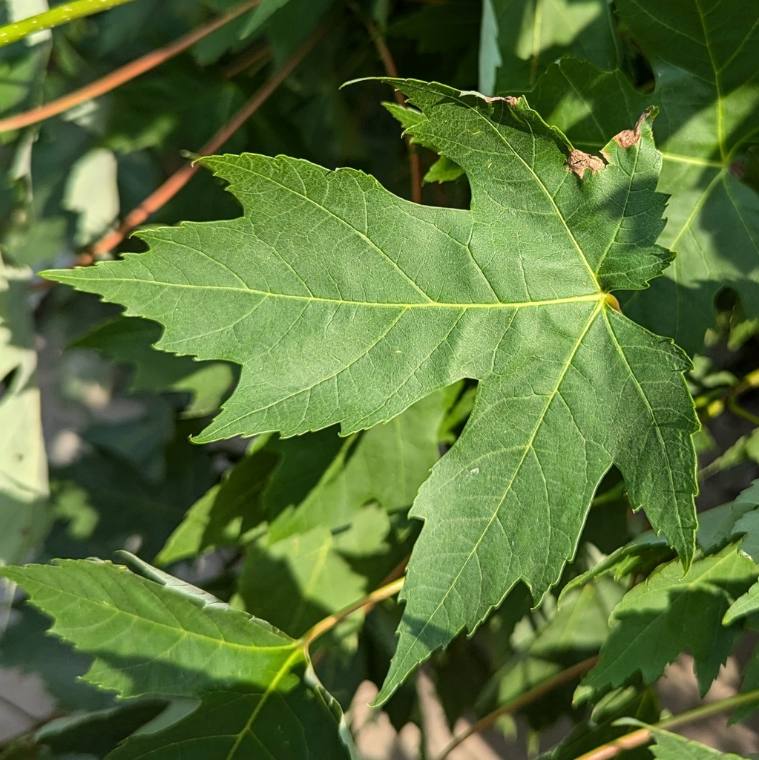
Silver maple grows wild along rivers, floodplains and wet bottomlands from New Brunswick and southern Quebec west to Minnesota and south to Florida. It tolerates spring flooding better than most trees. Its seeds ripen in late spring, have no dormancy and germinate as soon as they land on wet mud, which lets it colonize fresh river deposits. Squirrels depend on its large buds in early spring, and old trunks often hollow out into cavities used by owls, woodpeckers and raccoons.
Carl Linnaeus named the species Acer saccharinum, a name close to that of sugar maple (Acer saccharum); the sap is sweet but lower in sugar, so it is rarely tapped commercially. Indigenous peoples harvested its sap and used the soft wood, and the Greenbelt Indigenous Botanical Survey notes it as a soft maple used to make dye. After the Second World War it was planted widely as a fast street tree, and some cities later banned it because its brittle limbs break in storms and its roots buckle pavement and clog drains.