Dorval and the West Island · Tiohtià:ke
Eco de l’OuestLow-mow lawns and eco gardens Book a consult
← All plants
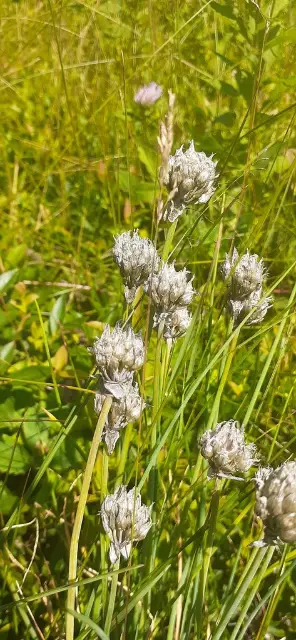
Chives

Photo: cam_boucher (no rights reserved), CC0, via iNaturalist · Rivière-du-Loup, QC, Canada, 2021-07-13

Flowers and groundcovers · Native to Quebec

Chives

Allium schoenoprasum Amaryllidaceae

Chives form dense clumps of slender, hollow, grass-like leaves that smell of onion when bruised. In late spring round clusters of 30 to 50 pink-purple, star-shaped flowers rise above the foliage. Bees and other pollinators visit them heavily. The clumps die back in winter and return reliably each spring.

Latin
Allium schoenoprasum
L. · family Amaryllidaceae
English
Chives
wild chives
French
Ciboulette commune
ciboulette, ail civette, brûlotte, oignon sauvage, cives farouches, vives
Kanien'kéha (Mohawk)
Name not yet recorded
No Kanien'kéha name was found. The Greenbelt Indigenous Botanical Survey has no page for wild chives at the addresses checked.
Anishinaabemowin (Ojibwe)
Name not yet recorded
The Ojibwe People's Dictionary search for 'wild chives' returned no entry for chives or Allium schoenoprasum, and no other citable Anishinaabemowin name was found.

Through the year

Chives in every season.

Story

The history of chives.

Chives are the only Allium native to both the Old World and the New World. The natural range covers temperate Eurasia from the Urals to Kamchatka, and in North America runs across Alaska, most of Canada and parts of the northern United States. Native plants favour river shores and meadows, while escaped garden plants also turn up in fields, roadsides and vacant lots, which makes native and introduced populations hard to tell apart.

The name schoenoprasum comes from Greek words for sedge or rush and leek, and chive comes from French cive, from the Latin cepa for onion. Use of chives is thought to go back 5,000 years, and in medieval Europe they were grown as rush leek. Native Americans used the bulbs and leaves to flavour fish, soups and salads.

Sources: Wikipedia: Chives · Go Botany: Allium schoenoprasum · VASCAN: Allium schoenoprasum

Characteristics

The plant at a glance.

Height30 to 45 cm
Spread30 to 45 cm, expanding as the clump grows
HabitClumping perennial from small bulbs
Bloom timeMay to July here
FlowersRound umbels of 30 to 50 pink to purple star-shaped flowers
FoliageSlender, hollow, grass-like leaves smelling of onion
FruitSmall capsules with black seed
HardinessZone 3
LightFull sun to part shade
MoistureAverage to moist, well-drained
Spread behaviourClumping; self-sows readily if flowers are left to set seed
Native rangeTemperate Eurasia and North America
Quebec statusNative

In the Flight Path Garden

Where it grows here.

ZonesOrnamental Border, Full Sun · Ornamental Border, Partial Sun
How many36
Planted2026

Chives give early pollinator forage and an edible, deer-resistant edge plant. The clumps fill in and cover the soil with little care.

Wildlife

Who uses it.

  • The flowers attract bees and other pollinators.
  • Highly resistant to deer browsing because of the onion scent.
  • Seed heads left in place can be visited by seed-eating birds.

Sources: NC State Extension Plant Toolbox: Allium schoenoprasum

Care

What to do, season by season.

Spring

Cut old growth and divide crowded clumps once new leaves appear.

Summer

Deadhead after bloom to prevent heavy self-seeding and to encourage fresh leaves. Water in long dry spells.

Fall

Divide clumps in fall if needed, then mulch lightly.

Winter

No care is needed, because the leaves die back and the bulbs are hardy.

Relations

Knowledge and use.

Go Botany records that Native Americans used the bulbs and leaves of wild chives to flavour foods such as fish, soups and salads.

Source: Go Botany: Allium schoenoprasum