Dorval and the West Island · Tiohtià:ke
Eco de l’OuestLow-mow lawns and eco gardens Book a consult
← All plants
Butterfly milkweed

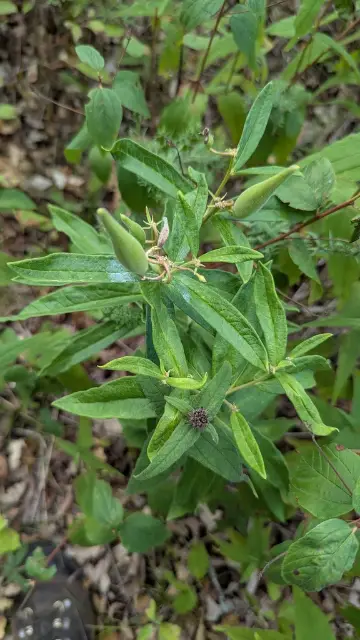
Photo: treelogical, CC BY 4.0, via iNaturalist · Northumberland County, ON, Canada, 2025-08-24

Flowers and groundcovers · Native to Quebec

Butterfly milkweed

Asclepias tuberosa Apocynaceae

Butterfly milkweed is a clumping perennial 30 to 70 cm tall with flat-topped clusters of bright orange, yellow or red flowers. Despite the name it has no milky sap. The leaves are rough, hairy and lance-shaped, and the plant makes decorative seed pods in fall. It grows from a deep taproot and is slow to emerge in spring, so its position should be marked.

Latin
Asclepias tuberosa
L. · family Apocynaceae
English
Butterfly milkweed
butterflyweed, orange milkweed, pleurisy root
French
Asclépiade tubéreuse
Kanien'kéha (Mohawk)
Tsikenetshehwén:ta
Otshehwén:ta; Kanon'tíneken's
Genus-level: Canadian Geographic gives Tsikenetshehwén:ta for common milkweed (Asclepias syriaca); NYS 4-H gives Otshehwén:ta and Kanon'tíneken's for 'Milkweed' without a species. Neither names butterfly milkweed specifically.
Anishinaabemowin (Ojibwe)
Name not yet recorded
A search of the Ojibwe People's Dictionary for 'milkweed' returned no results, and no citable Anishinaabemowin name for this species was found.

Through the year

Butterfly milkweed in every season.

Story

The history of butterfly milkweed.

Butterfly milkweed grows in dry, sunny, well-drained open ground in eastern North America. VASCAN records it as native in Ontario and Quebec. It is a larval host for monarch and queen butterflies and several moths, though monarchs are reported to prefer other milkweeds, likely because of its rough leaves and low cardenolide content. It also feeds native bees, bumble bees and hummingbirds.

The genus is named for Asclepius, the Greek god of healing, and tuberosa refers to the tuberous root. Its older English name pleurisy root comes from historical medicinal use by Native Americans and settlers. The fibre from the seed pods was spun into candle wicks.

Sources: Wikipedia: Asclepias tuberosa · Lady Bird Johnson Wildflower Center: Asclepias tuberosa · VASCAN: Asclepias tuberosa

'Gay Butterflies'

A seed-raised mixture of yellow, orange and red-orange flowers on plants about 70 cm tall, listed as hardy in zones 3 to 8 and flowering from June to August, sometimes in the first year. The breeder and date of selection were not found in the sources checked.

Characteristics

The plant at a glance.

Height30 to 70 cm
Spread30 to 60 cm
HabitClumping perennial with a deep taproot
Bloom timeJune to August
FlowersFlat-topped clusters of orange, yellow or red flowers; 'Gay Butterflies' is a mix of these
FoliageAlternate, lance-shaped, dark green, rough and hairy
FruitSlender seed pods with silky-tufted seeds
HardinessZone 3; 'Gay Butterflies' zones 3 to 8
LightFull sun
MoistureDry to medium; highly drought tolerant
Spread behaviourClumping; self-sows lightly; difficult to move once established
Native rangeEastern and central North America, including Ontario and Quebec
Quebec statusNative

In the Flight Path Garden

Where it grows here.

ZonesSt. Lawrence Lowlands Demonstration Garden · Meadow and Alternative Lawn Bed
How many4
Planted2026

It is a sun-loving, drought-proof perennial that gives bright summer colour and a monarch host plant on dry, well-drained ground.

Wildlife

Who uses it.

  • Larval host plant for monarch, queen and gray hairstreak butterflies, and for several moths.
  • Special value to native bees and bumble bees, and visited by hummingbirds.
  • All plant parts are toxic if eaten in quantity, which makes it unappealing to most browsers.

Sources: Lady Bird Johnson Wildflower Center: Asclepias tuberosa · Wikipedia: Asclepias tuberosa

Care

What to do, season by season.

Spring

Mark the clump, since butterfly milkweed shoots do not appear until late spring. Plant in full sun in well-drained soil.

Summer

Water only while establishing. Deadhead lightly to extend bloom, leaving some pods in late summer.

Fall

Leave pods for seed and stems for insects. Do not move established plants because of the deep taproot.

Winter

No protection is needed. Cut stems back in early spring.

Relations

Knowledge and use.

Native Americans and settlers used the root historically, which gave the plant its name pleurisy root, and seed pod fibre was spun into candle wicks.

Source: Wikipedia: Asclepias tuberosa