Dorval and the West Island · Tiohtià:ke
Eco de l’OuestLow-mow lawns and eco gardens Book a consult
← All plants
Astilbe

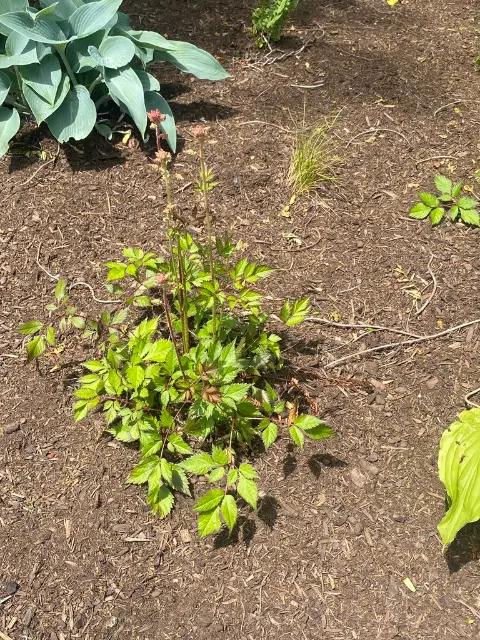
Photo: Sandy Wolkenberg, CC BY 4.0, via iNaturalist · S Winton Rd, Rochester, NY, US, 2026-06-04

Flowers and groundcovers · Introduced from Asia (garden hybrids)

Astilbe

Astilbe (hybrid cultivars) Saxifragaceae

Astilbes are clumping perennials with fern-like, often bronze-green leaves and tall, feathery plumes of tiny flowers. The three cultivars here differ in form: 'White Gloria' has creamy white plumes, 'Dark Side of the Moon' has dark foliage with purple flowers, and 'Liliput' stays low. They form tidy mounds in shade and the dried plumes persist into winter.

Latin
Astilbe (hybrid cultivars)
family Saxifragaceae · also Astilbe × arendsii (Arends hybrids); Spiraea (older garden usage)
English
Astilbe
false goat's beard, false spirea
French
Astilbe
Kanien'kéha (Mohawk)
Name not yet recorded
These are garden hybrids of Asian species, and no Kanien'kéha name is attested. The Greenbelt Indigenous Botanical Survey species list has no astilbe entry.
Anishinaabemowin (Ojibwe)
Name not yet recorded
These are garden hybrids of Asian species, and no Anishinaabemowin name is attested. The Greenbelt survey has no astilbe entry.

Through the year

Astilbe in every season.

Story

The history of astilbe.

The genus Astilbe ranges from the Himalayas, China, Japan and the Russian Far East to the southeastern United States, where its species grow in mountain ravines and woodlands. Garden hybrids are mostly derived from Asian species. Astilbes tolerate shade, clay and wet soil.

Georg Arends of Germany developed most of the hybrids now sold in North America in the 1920s, crossing several species, and they are grouped as the Arendsii Group (Astilbe × arendsii). Dwarf forms such as 'Liliput' typically include Astilbe simplicifolia, and the Chinese astilbe group, including 'Dark Side of the Moon', flowers later in summer.

Sources: Wikipedia: Astilbe · Wikipedia: Astilbe Arendsii Group · NC State Extension: Astilbe x arendsii · RHS: Choosing astilbes, dwarf forms

'Dark Side of the Moon'

A Chinese astilbe type with deep chocolate-burgundy foliage and rosy purple late-summer flowers from raspberry buds, about 50 to 55 cm tall. Proven Winners markets it, and it was named a 2026 Perennial of the Year.

'Liliput'

A dwarf astilbe, a type bred from small species such as Astilbe simplicifolia. Its breeder and date were not confirmed in a citable source.

'White Gloria'

An Arendsii Group hybrid with dense, blocky plumes of creamy white flowers in June and July, about 70 cm tall. Its breeder was not named in the sources found.

Where it comes from

How it got to Canada.

Native rangeAsian species (China, Japan, the Himalayas, the Russian Far East); the hybrids were raised in Germany

Arends crossed several Asian species in Germany in the 1920s, and the resulting hybrids spread through the nursery trade into European and North American gardens. In the Flight Path Garden they are cultivated ornamentals. No sources were found showing them naturalizing or listed as invasive in Quebec.

Sources: NC State Extension: Astilbe x arendsii · Wikipedia: Astilbe Arendsii Group

Characteristics

The plant at a glance.

Height'Liliput' low; 'Dark Side of the Moon' about 50 to 55 cm; 'White Gloria' about 70 cm
Spread45 to 70 cm
HabitMounding, clumping perennial
Bloom timeJune to August depending on cultivar
FlowersFeathery plumes of tiny flowers; white, rosy purple
FoliageFern-like, green to bronze; deep burgundy in 'Dark Side of the Moon'
FruitSmall dry capsules; dried plumes persist
HardinessZone 3 to 4
LightPart shade to shade; more sun with steady moisture
MoistureConsistently moist, rich soil
Spread behaviourSlowly widening clump; divide every 3 to 4 years
Native rangeAsian species, hybridized in Germany
Quebec statusNot native, cultivated

In the Flight Path Garden

Where it grows here.

ZonesOrnamental Border, Full Sun · Ornamental Border, Partial Sun
How many23
Planted2023

Astilbes give the front borders reliable plume colour in shade and moist spots where sun-loving perennials struggle.

Wildlife

Who uses it.

  • Bees and butterflies visit the plumes in summer.
  • Astilbes are rated resistant to deer and rabbits.
  • They have little host-plant value for native caterpillars compared with native perennials.

Sources: NC State Extension: Astilbe x arendsii · Proven Winners: 'Dark Side of the Moon'

Care

What to do, season by season.

Spring

Divide crowded clumps in spring and top-dress with compost. Cut back last year's dried plumes.

Summer

Water often; foliage scorches and flowering drops in drought. Mulch to hold moisture.

Fall

Leave the plumes standing if you like the winter look. Divide in fall if needed.

Winter

Hardy in Montréal. Mulch the crowns lightly where snow cover is thin.

Relations

Knowledge and use.

Nothing recorded yet from a source we can cite.