Dorval and the West Island · Tiohtià:ke
Eco de l’OuestLow-mow lawns and eco gardens Book a consult
← All plants
Fringed sedge

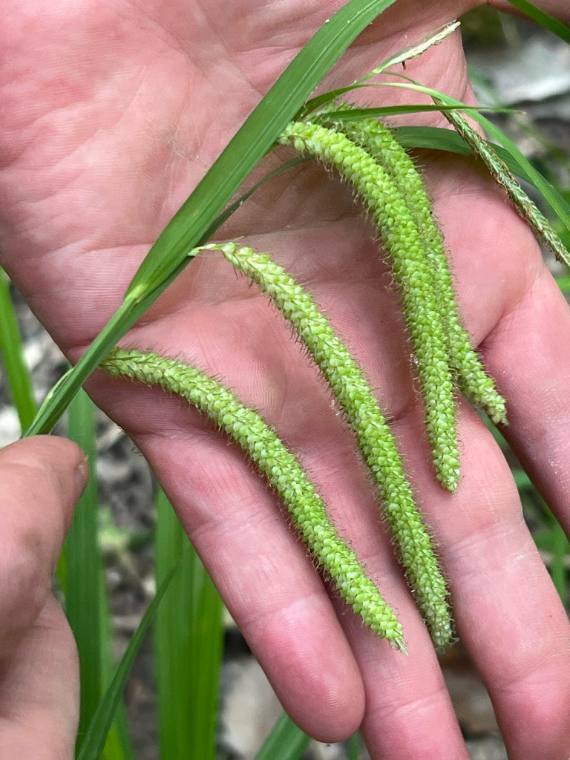
Photo: Anne Parker, CC BY 4.0, via iNaturalist · Church View, VA, US, 2026-05-21

Grasses, sedges and ferns · Native to Quebec

Fringed sedge

Carex crinita Cyperaceae

Fringed sedge is a clump-forming native sedge with a tussock of arching leaves and stems about 1 m tall. Short male spikes sit at the top of the stem, with several long, drooping female spikes below that give the plant its fringed look. Seed spikes mature from June to August and hang gracefully through summer. In wet soil it can slowly spread by short creeping rhizomes into loose colonies.

Latin
Carex crinita
Lam. · family Cyperaceae
English
Fringed sedge
French
Carex crépu
Kanien'kéha (Mohawk)
Name not yet recorded
No Greenbelt Indigenous Botanical Survey page for sedges was found by search, and no other citable Kanien'kéha name for this species was found.
Anishinaabemowin (Ojibwe)
Name not yet recorded
A search of the Ojibwe People's Dictionary for 'sedge' returned no results, and no citable Anishinaabemowin name for this species was found.

Through the year

Fringed sedge in every season.

Story

The history of fringed sedge.

Fringed sedge grows in swamps, bogs, shorelines, floodplain forests and wet ditches across central and eastern Canada and the central and eastern United States. It is an obligate wetland species, meaning it almost always grows in wet places. It is native in Quebec and gives its name to a group of closely related sedges, the Carex crinita complex.

The species was described by Jean-Baptiste Lamarck. The epithet crinita refers to the long-awned scales of the female spikes. Three varieties are currently accepted.

Sources: VASCAN: Carex crinita · Wikipedia: Carex crinita · Minnesota Wildflowers: Carex crinita

Characteristics

The plant at a glance.

Height40 to 120 cm; often about 90 cm
SpreadClumps 60 to 90 cm wide, slowly widening
HabitArching tussock
Bloom timeJune to August
Flowers1 to 3 male spikes above 2 to 6 drooping female spikes
FoliageArching grass-like leaves forming a tussock
FruitOval-elliptic perigynia with a short beak, in long drooping spikes
HardinessZone 5 or colder
LightFull sun to part shade
MoistureMedium to wet; obligate wetland species
Spread behaviourLoose to dense clumps; may form loose colonies from creeping rhizomes
Native rangeCentral and eastern Canada and the central and eastern United States
Quebec statusNative

In the Flight Path Garden

Where it grows here.

ZonesRain Garden #1
How many5
Planted2025

In Rain Garden #1 it tolerates wet feet and periodic flooding, and its dense clumps help hold soil and slow runoff.

Wildlife

Who uses it.

  • Seed is eaten by many birds, from sparrows to ducks.
  • Host plant for several butterflies, including the Appalachian brown, the eyed brown and various skippers.
  • Highly deer resistant, and the foliage supports leafhoppers, grasshoppers and katydids.

Sources: Plant profile: Carex crinita, wildlife and deer resistance

Care

What to do, season by season.

Spring

Cut back old foliage to a few centimetres in early spring before new growth starts. Divide crowded clumps if you want more plants.

Summer

Keep the soil wet in the first summer. Established plants handle seasonal flooding well.

Fall

Leave the seed spikes and foliage standing for birds and insects.

Winter

Leave the clumps in place under snow. No protection is needed.

Relations

Knowledge and use.

Nothing recorded yet from a source we can cite.