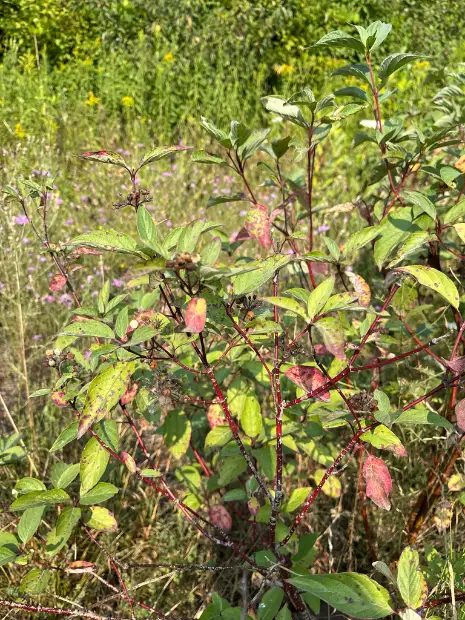
Red-osier dogwood is native across the boreal and temperate zones of northern and western North America, from Alaska to Newfoundland. It grows in rich, poorly drained soils such as stream banks, wetlands and floodplains, tolerates flooding, and is among the early shrubs to colonize disturbed ground. Its berries feed dozens of bird species and its stems are browsed by deer, moose and rabbits.
The epithet sericea means silky, a reference to the fine hairs on the leaves. Indigenous peoples used the inner bark as a traditional smoking mixture, and Ojibwe people made a dye from the bark. The plant is also planted for streambank restoration because its roots hold soil well. The yellow-stemmed 'Flaviramea' became a garden standard from about 1900.