Dorval and the West Island · Tiohtià:ke
Eco de l’OuestLow-mow lawns and eco gardens Book a consult
← All plants
Canada wildrye

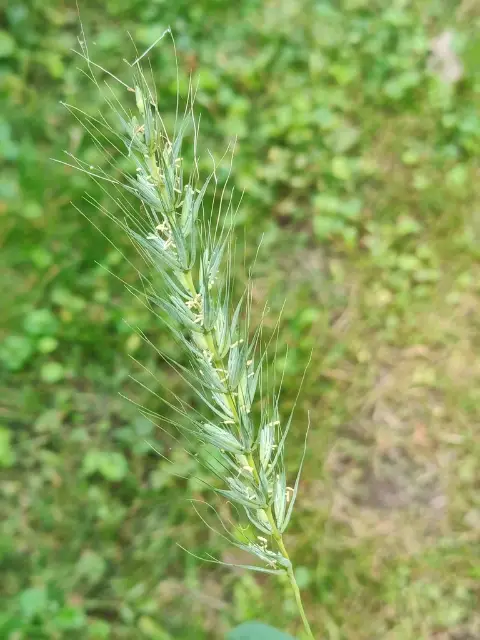
Photo: Scott Deerwester, CC BY 4.0, via iNaturalist · Clay Township, IN, USA, 2021-06-11

Grasses, sedges and ferns · Native to Quebec

Canada wildrye

Elymus canadensis Poaceae

Canada wildrye is a cool-season bunchgrass with flat, rough blue-green leaves and tough stems reaching 1 to 1.5 m. In summer it carries nodding, bristly spikes up to 25 cm long, whose long awns catch the light. The seed heads turn tan in fall and last into winter. It establishes quickly from seed and fills gaps in new plantings.

Latin
Elymus canadensis
L. · family Poaceae
English
Canada wildrye
Great Plains wildrye, nodding wildrye
French
Élyme du Canada
Kanien'kéha (Mohawk)
Name not yet recorded
Not listed among the species on the Greenbelt Indigenous Botanical Survey grid pages checked. No other citable Kanien'kéha source was found.
Anishinaabemowin (Ojibwe)
Name not yet recorded
Not listed on the Greenbelt survey, and the Ojibwe People's Dictionary search for Elymus returned no entries.

Through the year

Canada wildrye in every season.

Story

The history of canada wildrye.

Canada wildrye is native across much of North America, most abundant in the central plains, and grows in woodlands, savannas, dunes, prairies and disturbed ground. It is a perennial bunchgrass that reproduces mainly by self-pollination and forms fungal partnerships in its roots. Seeds feed granivorous birds and the grass is the larval host for the zabulon skipper.

Linnaeus described the species as Elymus canadensis. The grass is used widely in conservation, roadside and grassland seed mixes and to stabilize eroded soil, and a forage cultivar called 'Homestead' was developed for livestock.

Sources: Wikipedia: Elymus canadensis · Lady Bird Johnson Wildflower Center: Elymus canadensis · VASCAN: Elymus canadensis

Characteristics

The plant at a glance.

Height60 cm to 1.5 m
SpreadAbout 60 cm
HabitUpright bunchgrass with arching seed heads
Bloom timeJune to July
FlowersInconspicuous; nodding bristly spike up to 25 cm
FoliageFlat, rough, blue-green leaves 20 to 30 cm long
FruitSeeds with awns longer than 3 cm
HardinessZone 3
LightFull sun to part shade
MoistureMedium; drought tolerant once established
Spread behaviourClumping; self-sows
Native rangeMost of North America, abundant in the Great Plains
Quebec statusNative

In the Flight Path Garden

Where it grows here.

ZonesSt. Lawrence Lowlands Demonstration Garden
How many27
Planted2023

It gives quick, airy cover and seed for birds while slower perennials fill in around it.

Wildlife

Who uses it.

  • Larval host plant for the zabulon skipper butterfly (Poanes zabulon).
  • Seeds are eaten by granivorous birds, and the grass provides nesting material.
  • Highly deer resistant.

Sources: Lady Bird Johnson Wildflower Center: Elymus canadensis

Care

What to do, season by season.

Spring

Cut last year's stems to 10 cm before new growth. Divide or move clumps in spring if needed.

Summer

Little care is needed; water only in prolonged drought.

Fall

Leave the seed heads for birds. Plant or divide in autumn.

Winter

Leave stems standing for texture and cover. Keep the awned seed heads away from dog-frequented paths, since the awns can injure dogs' eyes.

Relations

Knowledge and use.

Nothing recorded yet from a source we can cite.