Dorval and the West Island · Tiohtià:ke
Eco de l’OuestLow-mow lawns and eco gardens Book a consult
← All plants
Spotted Joe-Pye-weed

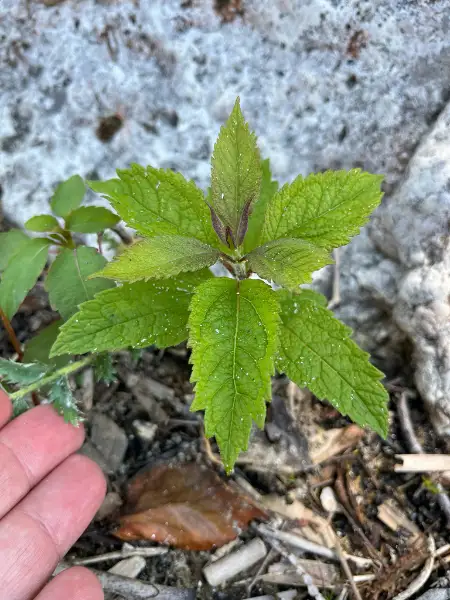
Photo: Andrew Sebastian, CC BY 4.0, via iNaturalist · Wasaga Beach, ON, CA, 2026-06-28

Flowers and groundcovers · Native to Quebec

Spotted Joe-Pye-weed

Eutrochium maculatum (syn. Eupatorium maculatum) Asteraceae

Spotted Joe-Pye-weed is a tall perennial with sturdy stems that are purple-spotted or fully purple, topped in late summer by large, domed clusters of dusky rose-purple flower heads. It reaches about 2 m. The heads have disc flowers only. It thrives in moist ground and is a favourite of butterflies and bees.

Latin
Eutrochium maculatum (syn. Eupatorium maculatum)
(L.) E.E. Lamont · family Asteraceae · also Eupatorium maculatum L.; Eupatoriadelphus maculatus
English
Spotted Joe-Pye-weed
French
Eupatoire maculée
eupatoire pourpre
Kanien'kéha (Mohawk)
tewaten'én:yaya'ks
Given on the Greenbelt Indigenous Botanical Survey page for Joe Pye weed, which covers the plant as a group with boneset; the page gives no meaning or community.
Anishinaabemowin (Ojibwe)
meskwaagamesek
me'skwana'kak, ba'giso'wan
All three names are listed on the same survey page for Joe Pye weed; the page gives no further meaning or community. The Ojibwe People's Dictionary search for 'joe pye' returned no entries.

Through the year

Spotted Joe-Pye-weed in every season.

Story

The history of spotted joe-pye-weed.

This species grows across much of the United States and Canada, in marshes, fens, swamps, ditches, seepage areas and wet fields, and VASCAN lists it from British Columbia to Newfoundland including Quebec. It is the only Eutrochium species found west of the Great Plains. Its flowers draw butterflies and honeybees, and its leaves feed the larvae of several moths.

The species name maculatum means spotted and refers to the purple spots on the stem. The plant was long placed in Eupatorium and is now classified in Eutrochium, with Eupatorium maculatum as its older name. The Greenbelt Indigenous Botanical Survey records it as a companion plant to boneset in Indigenous use.

Sources: Wikipedia: Eutrochium maculatum · VASCAN: Eutrochium maculatum · Greenbelt Indigenous Botanical Survey: Boneset and Joe Pye Weed

Characteristics

The plant at a glance.

HeightUp to about 2 m
SpreadAbout 1 m
HabitTall, erect clump with unbranched stems
Bloom timeLate summer, July to September
FlowersRose-purple heads of 8 to 22 disc flowers, no ray flowers, in domed clusters
FoliageWhorls of toothed leaves on stems that are purple-spotted or fully purple
FruitSmall dry fruits with a feathery tuft
HardinessHardy in Montréal's zone 5a
LightFull sun to part shade; flourishes in non-shaded sites
MoistureMoist to wet
Spread behaviourClumping
Native rangeWidespread across much of the United States and Canada
Quebec statusNative

In the Flight Path Garden

Where it grows here.

ZonesSt. Lawrence Lowlands Demonstration Garden · Meadow and Alternative Lawn Bed
How many26
Planted2026

It adds a tall, late-summer nectar source for butterflies and bees in moist beds, and its height gives the back of the border a clear layer.

Wildlife

Who uses it.

  • Attracts butterflies and honeybees to its late-summer flowers.
  • Larval host for the Clymene moth, eupatorium borer moth, ruby tiger moth and three-lined flower moth.
  • Deer resistance was not confirmed in the sources checked.

Sources: Wikipedia: Eutrochium maculatum

Care

What to do, season by season.

Spring

New shoots emerge in May. Pinching stems once in early June keeps them shorter and reduces the need for staking.

Summer

Water in dry spells, as plants wilt quickly in drought. Flower heads open from July.

Fall

Leave the seed heads standing for birds and winter structure.

Winter

No protection needed. Cut stems back in early spring.

Relations

Knowledge and use.

The Greenbelt Indigenous Botanical Survey lists Joe Pye weed as a companion plant to boneset in Indigenous plant knowledge, and gives Kanien'kéha and Anishinaabemowin names for it.

Source: Greenbelt Indigenous Botanical Survey: Boneset and Joe Pye Weed