Dorval and the West Island · Tiohtià:ke
Eco de l’OuestLow-mow lawns and eco gardens Book a consult
← All plants
Wintergreen

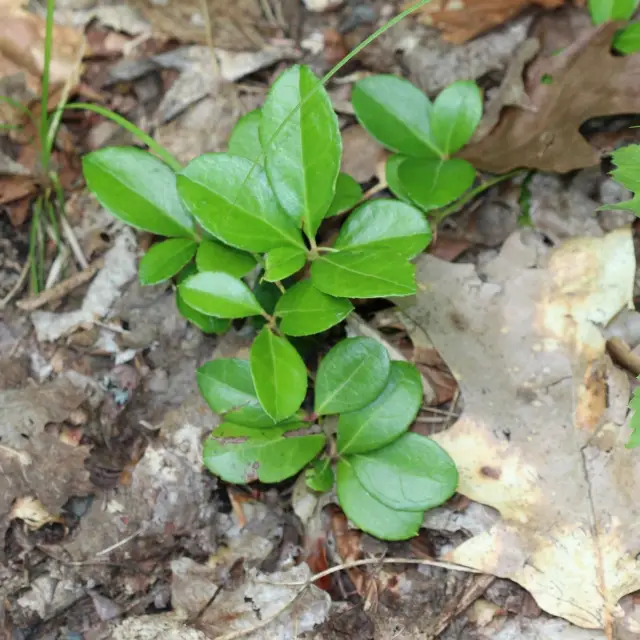
Photo: adam1420, CC BY 4.0, via iNaturalist · Peterborough, CA-ON, CA, 2026-06-24

Flowers and groundcovers · Native to Quebec

Wintergreen

Gaultheria procumbens Ericaceae

Wintergreen is a low evergreen groundcover about 15 cm tall with glossy dark green oval leaves that turn reddish in cold weather. Small white to pink bell-shaped flowers hang under the leaves in summer. They are followed by aromatic red berries that persist into winter. The plant spreads slowly by shallow rhizomes to form a mat.

Latin
Gaultheria procumbens
L. · family Ericaceae
English
Wintergreen
eastern teaberry, checkerberry, creeping wintergreen, boxberry, mountain tea
French
Gaulthérie couchée
thé des bois, petit thé, pommes de terre, thé rouge
Kanien'kéha (Mohawk)
Teyun'rahdasta:te
kanenrahtà:tens
Spelling as given by the Greenbelt Indigenous Botanical Survey wintergreen page, which glosses kanenrahtà:tens as 'thick leaves'.
Anishinaabemowin (Ojibwe)
Wiinsibak
Wiinisiibag, Wiinisiibagad, wini'sibugons', wini'sibagons
Spelling as given by the Greenbelt Indigenous Botanical Survey; it lists the forms above and notes plurals with the -ak suffix. The Ojibwe People's Dictionary search for wintergreen returned no results, so no dictionary entry was found.

Through the year

Wintergreen in every season.

Story

The history of wintergreen.

Wintergreen grows in pine and hardwood forests and oak-heath woods from Newfoundland to southeastern Manitoba and south to Alabama. It prefers acidic soils, spreads by long rhizomes lying in the top 2 to 3 cm of soil, and is a calcifuge plant. White-tailed deer, grouse, wild turkey, black bears, foxes and rodents eat the leaves or berries, and the eastern chipmunk is noted as a favourite consumer.

The epithet procumbens refers to its low, spreading habit. The genus honours Jean-François Gaultier, and the plant has long been used to flavour tea, candy and chewing gum; teaberry ice cream is still a regional flavour in Pennsylvania. The Greenbelt Indigenous Botanical Survey records that Haudenosaunee and Anishinaabe peoples have used the leaves in food and as a beverage for centuries.

Sources: Wikipedia: Gaultheria procumbens · Lady Bird Johnson Wildflower Center: Gaultheria procumbens · Greenbelt Indigenous Botanical Survey: Wintergreen

'Cherry Berries'

A patented selection (PP29093, sold as Cherry Berries) with large, showy, bright red berries that hold from fall into spring. It stays 15 to 30 cm tall and spreads 60 to 90 cm, and is listed as hardy in USDA zones 4 to 9. The breeder and year of introduction were not found in the sources checked.

Characteristics

The plant at a glance.

Height10 to 15 cm; 'Cherry Berries' 15 to 30 cm
SpreadSlowly forms a mat; 'Cherry Berries' 60 to 90 cm
HabitLow, creeping evergreen groundcover
Bloom timeJuly to August
FlowersSmall white to pink bell-shaped flowers
FoliageGlossy dark green oval leaves, reddish in cold weather, aromatic
FruitRed berries that persist from fall into spring
HardinessZone 3 to 4 in the wild; 'Cherry Berries' listed for zones 4 to 9
LightPart shade to shade
MoistureMedium; low water use once established
Spread behaviourShallow rhizomes; stems root at intervals
Native rangeNewfoundland to southeastern Manitoba, south to the Appalachians and Great Lakes
Quebec statusNative

In the Flight Path Garden

Where it grows here.

ZonesHügelkultur Garden
How many1
Planted2026

It gives an evergreen, acid-loving carpet in a shaded spot where turf and most perennials struggle, and its winter berries feed birds and small mammals.

Wildlife

Who uses it.

  • Chipmunks, grouse, mice, birds and deer eat the leaves and berries, often through winter.
  • White-tailed deer browse it throughout its range, and wild turkey, black bears and foxes eat the berries.
  • Fragrant flowers and berries bring birds and small mammals into the planting.

Sources: Lady Bird Johnson Wildflower Center: Gaultheria procumbens · Wikipedia: Gaultheria procumbens

Care

What to do, season by season.

Spring

Plant in acidic, humus-rich soil with a mulch of pine needles or leaf litter. Avoid lime, wood ash and fresh compost.

Summer

Keep the soil lightly moist while it establishes, then water only in drought. Do not walk on the mat.

Fall

Leave the berries in place for wildlife. Add a light layer of oak or pine leaves.

Winter

Snow cover protects the evergreen leaves. Protect from deer and rabbit browse with a light cover if browsing is heavy.

Relations

Knowledge and use.

The Greenbelt Indigenous Botanical Survey records that Haudenosaunee and Anishinaabe peoples have used the aromatic leaves in food and as a beverage by steeping them in hot water, sometimes sweetened with maple sugar. Kanien'kéha and Anishinaabemowin names are listed there.

Source: Greenbelt Indigenous Botanical Survey: Wintergreen