Dorval and the West Island · Tiohtià:ke
Eco de l’OuestLow-mow lawns and eco gardens Book a consult
← All plants
Blue flag

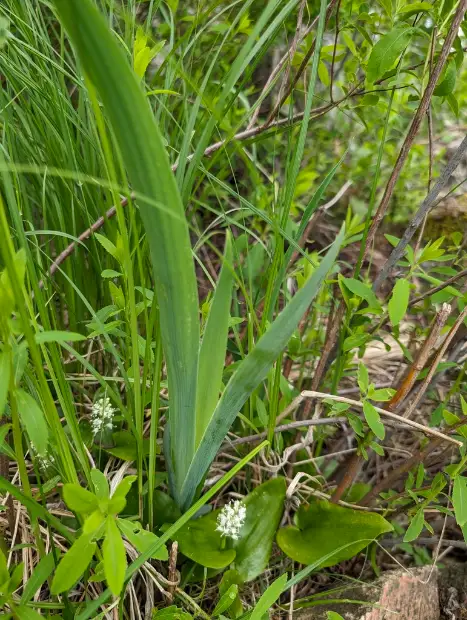
Photo: stephen, CC BY 4.0, via iNaturalist · Lake County, MN, USA, 2024-06-03

Flowers and groundcovers · Native to Quebec

Blue flag

Iris versicolor Iridaceae

Blue flag is a clumping wetland iris with sword-shaped blue-green leaves and violet-blue flowers veined in purple and yellow. Blooms open from late spring into early summer on stalks up to about 80 cm. Thick creeping rhizomes slowly widen the clump, and seed capsules follow the flowers. It thrives in shallow water or constantly moist ground.

Latin
Iris versicolor
L. · family Iridaceae
English
Blue flag
northern blue flag, harlequin blue flag, larger blue flag, multi-coloured blue flag
French
Iris versicolore
Kanien'kéha (Mohawk)
Name not yet recorded
The Greenbelt Indigenous Botanical Survey species list has no blue flag or iris entry, and no other citable Kanien'kéha source was found.
Anishinaabemowin (Ojibwe)
naˈ bûkûck
wikê; caboˈsîkûn
Smith (1932, pp. 371 and 430) records naˈ bûkûck, wikê and caboˈsîkûn ('milk root') for blue flag iris from different Ojibwe communities. Spelling is Smith's 1932 transcription, not modern double-vowel Ojibwe.

Through the year

Blue flag in every season.

Story

The history of blue flag.

Iris versicolor grows in marshes, wet meadows and shorelines across eastern Canada, including Quebec, the Atlantic provinces, Ontario, Manitoba and Saskatchewan, and the eastern United States. It spreads from thick, creeping rhizomes into large clumps. The name versicolor means variously coloured. It is a parent of two hybrid irises, Iris × robusta and Iris × sancti-cyri.

It is Quebec's provincial flower, a designation made in 1999. All parts contain toxic compounds, and the sap can irritate skin, so the plant should be handled with gloves and kept away from livestock.

Sources: VASCAN: Iris versicolor · Wikipedia: Iris versicolor

Characteristics

The plant at a glance.

Height40 to 80 cm
Spread50 to 90 cm
HabitClumping with creeping rhizomes
Bloom timeMay to July
FlowersBlue to violet, six segments, veined in purple with a yellow patch
FoliageSword-shaped, blue-green leaves
FruitThree-sided capsules
HardinessZone 2
LightFull sun to part shade
MoistureWet to moist; tolerates shallow standing water
Spread behaviourRhizomes form large clumps
Native rangeEastern Canada and eastern United States
Quebec statusNative

In the Flight Path Garden

Where it grows here.

ZonesSt. Lawrence Lowlands Demonstration Garden · Meadow and Alternative Lawn Bed
How many18
Planted2026

It anchors wet and shoreline planting with early-summer colour and sword-like leaves that stay attractive after flowering. It is also Quebec's floral emblem.

Wildlife

Who uses it.

  • Flowers are visited by bumble bees and other long-tongued bees that can open the flower.
  • The leaves and rhizomes are toxic, so deer and other browsers generally avoid it.
  • Wet clumps shelter amphibians and aquatic insects around pond and rain-garden edges.

Sources: Wikipedia: Iris versicolor

Care

What to do, season by season.

Spring

Plant or divide rhizomes in early spring, setting them just below the surface. Keep the soil constantly moist.

Summer

Deadhead after flowering if you do not want seed. Wear gloves when handling plants, since the sap can irritate skin.

Fall

Trim yellowed leaves and divide congested clumps every few years.

Winter

Fully hardy. Leave the foliage over winter or cut it back in late fall.

Relations

Knowledge and use.

Nothing recorded yet from a source we can cite.