Dorval and the West Island · Tiohtià:ke
Eco de l’OuestLow-mow lawns and eco gardens Book a consult
← All plants
Self-heal

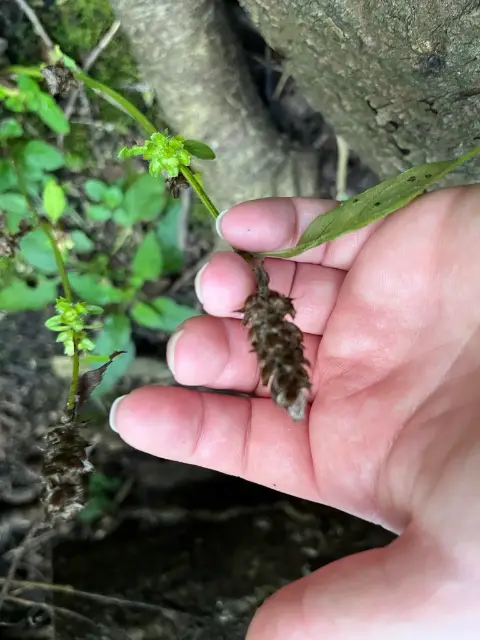
Photo: kristinpiston (no rights reserved), CC0, via iNaturalist · Hanlon Creek, Guelph, ON, CA, 2024-09-02

Flowers and groundcovers · Native to Quebec

Self-heal

Prunella vulgaris Lamiaceae

Self-heal is a low, creeping perennial with square, reddish stems and oval leaves, forming mats that rarely top 30 cm. Dense, cone-shaped spikes of violet, two-lipped flowers appear from early summer and continue into early fall. It tolerates mowing, so it blends into a bee lawn. Bumble bees and other small bees visit the flowers throughout the season.

Latin
Prunella vulgaris
L. · family Lamiaceae
English
Self-heal
heal-all, carpenter weed
French
Brunelle commune
prunelle vulgaire, herbe au charpentier
Kanien'kéha (Mohawk)
yako'nikonrákhas onónhkwa
katsitsoró:kon
Given by the Greenbelt survey for heal-all.
Anishinaabemowin (Ojibwe)
ingijibinaa
ogijibinaan, basi’bagak
Given by the Greenbelt survey for heal-all.

Through the year

Self-heal in every season.

Story

The history of self-heal.

Self-heal grows in lawns, meadows, woodland edges, roadsides and disturbed ground across temperate regions of Europe, Asia, Africa and North America. VASCAN treats the species as native across most of Canada, with two varieties, var. lanceolata and var. vulgaris, recognized; some sources consider the plant Eurasian in origin but widely distributed in North America before European contact. It spreads by creeping stems and thrives in moist, slightly acidic soils.

The genus name is linked to the German word for diphtheria, a disease the plant was once used against in Europe, and vulgaris means common. The plant has many old names tied to those traditional uses, including self-heal, heal-all and woundwort. It has also spread to Australia, New Zealand and Hawaii, where it is weedy.

Sources: Wikipedia: Prunella vulgaris · VASCAN: Prunella vulgaris · University of Arkansas Extension: Prunella vulgaris

Characteristics

The plant at a glance.

Height10 to 30 cm
SpreadMat-forming, 30 to 60 cm or more
HabitLow, creeping perennial
Bloom timeJune to September
FlowersViolet, two-lipped, in cone-shaped terminal spikes
FoliageOpposite oval to lance-shaped leaves, 1.5 to 6 cm long, on square stems
FruitFour small nutlets inside the persistent calyx
HardinessZone 3
LightFull sun to part shade
MoistureAverage to moist
Spread behaviourCreeping stems that root; also self-sows
Native rangeTemperate Eurasia, North Africa and North America
Quebec statusNative

In the Flight Path Garden

Where it grows here.

ZonesMeadow and Alternative Lawn Bed · St. Lawrence Lowlands Eco Mix Lawn
How many72
Planted2024

In the Meadow and Alternative Lawn bed and the Eco Mix Lawn self-heal fills gaps between grasses, takes mowing, and supplies flowers for small bees all summer. It also covers soil that would otherwise grow weeds.

Wildlife

Who uses it.

  • Flowers attract bumble bees, other small bees and butterflies.
  • Host plant for clouded sulphur butterfly larvae.
  • Low growth gives ground cover for small insects and tolerates foot traffic.

Sources: Wikipedia: Prunella vulgaris · University of Arkansas Extension: Prunella vulgaris

Care

What to do, season by season.

Spring

Rake lightly to remove thatch and let new growth fill gaps.

Summer

Mow high, at 8 to 10 cm, and delay mowing in patches during peak bloom. Water only in drought.

Fall

Let it seed itself into bare spots and leave leaf litter off the mat.

Winter

No care is needed, because the plant is hardy under snow.

Relations

Knowledge and use.

Nothing recorded yet from a source we can cite.