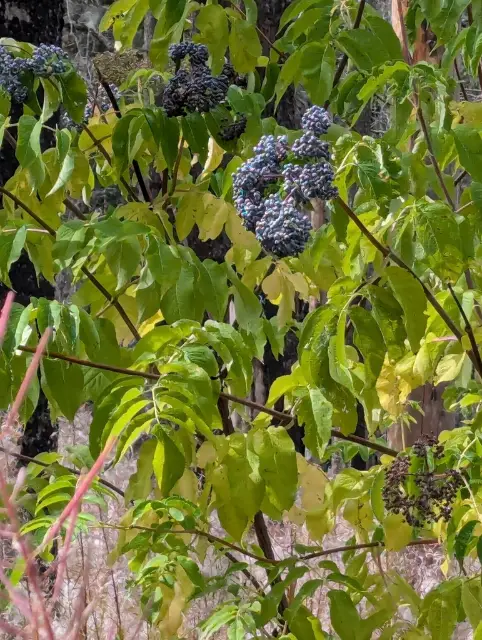
Common elderberry is native across North America east of the Rocky Mountains, in marshes, swamps and open floodplain woods, and it is documented as native in Quebec. Insects pollinate the flowers and birds and small mammals eat the fruit, while native bees nest in the hollow dead stems.
The genus name comes from Greek sambuce, an ancient wind instrument, because the pith can be pushed out of the twigs to make whistles. The species reached Britain from America in 1761. The Greenbelt survey records that Haudenosaunee and Anishinaabe people have long used elderberries as food and for dye, and that the teachers of Frederick Wilkerson Waugh at Six Nations of the Grand River described berries and flowers in syrups, pies and tarts around 1900. Raw leaves, bark and unripe fruit contain cyanogenic compounds, and only cooked ripe berries are eaten.