Dorval and the West Island · Tiohtià:ke
Eco de l’OuestLow-mow lawns and eco gardens Book a consult
← All plants
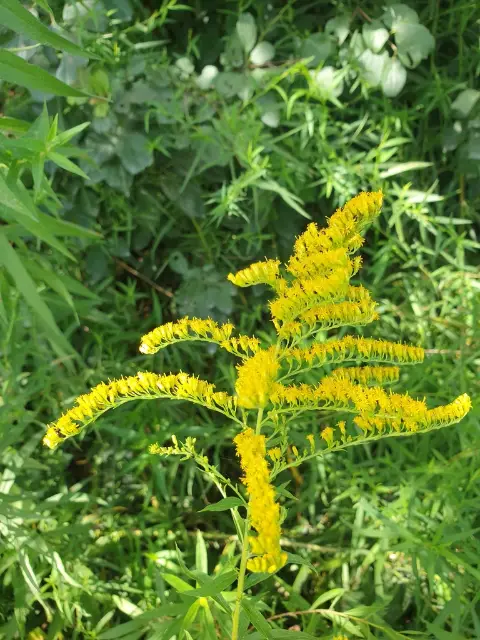
Canada goldenrod

Photo: elacroix-carignan (no rights reserved), CC0, via iNaturalist · Middlesex County, ON, Canada, 2023-08-22

Flowers and groundcovers · Native to Quebec

Canada goldenrod

Solidago canadensis Asteraceae

Canada goldenrod is a tall perennial with upright, leafy stems 60 to 150 cm tall and narrow, toothed leaves. From late summer into fall it carries pyramidal plumes of many small yellow flower heads. It spreads by running rhizomes into broad colonies. The seed heads turn fluffy and grey after bloom.

Latin
Solidago canadensis
L. · family Asteraceae
English
Canada goldenrod
French
Verge d'or du Canada
solidage du Canada, bouquets jaunes
Kanien'kéha (Mohawk)
Name not yet recorded
Goldenrod does not appear on the Greenbelt Indigenous Botanical Survey species list (grid pages 1 to 9 checked). No other citable Kanien'kéha source was found.
Anishinaabemowin (Ojibwe)
Name not yet recorded
Not on the Greenbelt survey list, and Ojibwe People's Dictionary searches for goldenrod and Solidago returned no entries.

Through the year

Canada goldenrod in every season.

Story

The history of canada goldenrod.

Canada goldenrod is native to northeastern and north-central North America and grows in zones 3 to 9. It is often among the first plants to colonize disturbed ground such as burned land and roadsides, and it tolerates conditions from very dry to waterlogged. Bees, wasps, flies, beetles, butterflies and moths visit the flowers, with bumblebees and paper wasps especially common, and at least eleven gall-forming insects live on it. Its running rhizomes and prolific seed let it dominate ground and form single-species patches.

Linnaeus named the species in 1753. It is also grown as an ornamental garden plant, and it has become a weed in parts of Europe and Asia where it was introduced.

Sources: Wikipedia: Solidago canadensis · VASCAN: Solidago canadensis

Characteristics

The plant at a glance.

Height60 to 150 cm, sometimes 180 cm
Spread60 cm or more, widening by rhizomes
HabitUpright clump-forming to colonial perennial
Bloom timeAugust to October
FlowersMany small yellow heads in a branching pyramidal cluster
FoliageNarrow toothed leaves along stiff stems
FruitSmall fluffy seeds
HardinessZone 3
LightFull sun
MoistureDry to wet; very adaptable
Spread behaviourRunning rhizomes and self-sowing; colonizes
Native rangeNortheastern and north-central North America
Quebec statusNative

In the Flight Path Garden

Where it grows here.

ZonesSt. Lawrence Lowlands Demonstration Garden
How many10
Planted2026

Late-summer flowers feed pollinators when little else is blooming and the plants fill tough, sunny ground.

Wildlife

Who uses it.

  • Visited by many bees, wasps, flies, beetles, butterflies and moths, particularly bumblebees and paper wasps.
  • Hosts at least eleven gall-forming insect species.
  • Deer browse it only occasionally.

Sources: Wikipedia: Solidago canadensis

Care

What to do, season by season.

Spring

Pull or dig out excess shoots at the edge of the planting to keep it in bounds. Cut back old stems if you left them standing.

Summer

Cut stems back by half in early summer if you want shorter, sturdier plants. Little watering is needed.

Fall

Let it bloom and go to seed; the late flowers are a nectar source. Divide clumps in spring or fall.

Winter

Leave stems for winter interest and as shelter for overwintering insects.

Relations

Knowledge and use.

Nothing recorded yet from a source we can cite.

Sources

Where this page comes from.

  1. VASCAN: Solidago canadensis
  2. Wikipedia: Solidago canadensis