Dorval and the West Island · Tiohtià:ke
Eco de l’OuestLow-mow lawns and eco gardens Book a consult
← All plants
Steeplebush

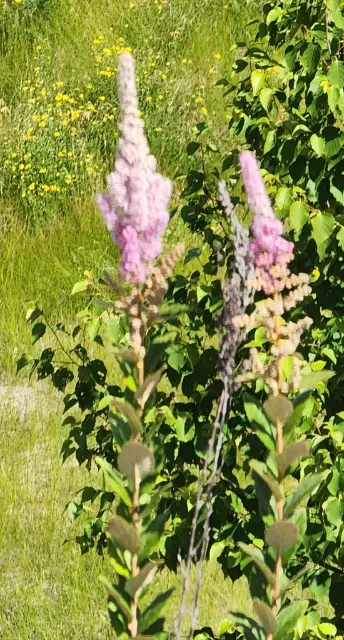
Photo: Jennifer Aitkens, CC BY 4.0, via iNaturalist · Carling, ON P0G, Canada, 2025-07-22

Shrubs and vines · Native to Quebec

Steeplebush

Spiraea tomentosa Rosaceae

Steeplebush is a small deciduous shrub that sends up thickets of slender, upright, mostly unbranched stems. Each stem ends in a narrow, steeple-shaped spike of tiny pink to rose-purple flowers with long pink stamens in mid to late summer. The leaves are dark green above and covered beneath with dense, matted, woolly hairs. After flowering, the spikes turn brown and hold their small seed pods through winter.

Latin
Spiraea tomentosa
L. · family Rosaceae
English
Steeplebush
Hardhack, tomentose meadowsweet
French
Spirée tomenteuse
Spirée rose, thé du Canada
Kanien'kéha (Mohawk)
Name not yet recorded
No attested Kanien'kéha name found. Checked the Greenbelt Indigenous Botanical Survey species index, which does not include steeplebush.
Anishinaabemowin (Ojibwe)
memîsgwûˈnagûg
Smith (1932, p. 386) records this name for steeplebush (Spiraea tomentosa) among the Flambeau Ojibwe, who made a tea from the leaves and flowers. Spelling is Smith's 1932 transcription, not modern double-vowel Ojibwe.

Through the year

Steeplebush in every season.

Story

The history of steeplebush.

Steeplebush grows from Nova Scotia and New Brunswick west through Quebec to Minnesota and south to North Carolina, Mississippi and Arkansas. It is a facultative wetland shrub of wet meadows, bogs, marshes, shores and damp roadsides, and it spreads by suckers into colonies. Its flowers are especially valuable to native bees, and its foliage is a host for the Columbia silkmoth and the New England buck moth.

The species name tomentosa refers to the woolly hairs that cover the underside of the leaves. Linnaeus named the species, and English speakers also call it hardhack. One of its Quebec French names, thé du Canada, records an old association with tea. It is easy to grow from seed or softwood cuttings and is now used in rain gardens and wetland restoration.

Sources: Lady Bird Johnson Wildflower Center: Spiraea tomentosa · Minnesota Wildflowers: Steeplebush · NC State Extension Plant Toolbox: Spiraea tomentosa · VASCAN: Spiraea tomentosa

Characteristics

The plant at a glance.

Height60 cm to 1.2 m
Spread90 cm to 1.5 m, wider as colonies
HabitUpright, multi-stemmed, suckering deciduous shrub
Bloom timeJuly to September
FlowersDense terminal spikes 10 to 20 cm long of tiny pink to rose-purple five-petalled flowers
FoliageElliptic, toothed leaves, dark green above, woolly and pale beneath; yellow in fall
FruitSmall brown follicles that split to release seed through fall and winter
HardinessZone 3
LightFull sun; dwindles in shade
MoistureMoist to wet, acidic soil
Spread behaviourSuckers into colonies
Native rangeNova Scotia and New Brunswick to Quebec and Minnesota, south to North Carolina, Mississippi and Arkansas
Quebec statusNative

In the Flight Path Garden

Where it grows here.

ZonesSt. Lawrence Lowlands Demonstration Garden
How many25
Planted2026

Planted in a group of 25, steeplebush forms a low, colonizing pink drift for damp, sunny ground. It feeds native bees in late summer and fills gaps between taller shrubs without shading them.

Wildlife

Who uses it.

  • Flowers are of special value to native bees and also draw butterflies.
  • Larval host for the Columbia silkmoth and the New England buck moth.
  • Bitter, astringent foliage means deer rarely browse it.

Sources: Lady Bird Johnson Wildflower Center: Spiraea tomentosa · NC State Extension Plant Toolbox: Spiraea tomentosa

Care

What to do, season by season.

Spring

Cut a few of the oldest stems to the ground before growth starts to keep the clump vigorous. Flowers form on the current year's growth, so spring pruning does not cost bloom.

Summer

Water during dry spells; steeplebush needs steady moisture and full sun to flower well.

Fall

Leave the brown seed spikes standing for winter interest and seed.

Winter

No care needed. Snow may bend the slender stems, which recover in spring.

Relations

Knowledge and use.

Nothing recorded yet from a source we can cite.