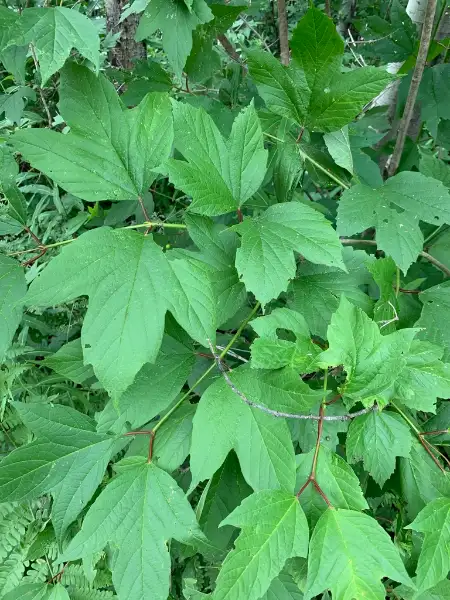
This shrub grows along forest edges, clearings, swamps, fens and shores across much of northern North America, including Quebec. The Minnesota Wildflowers account separates it from the very similar European guelder-rose by the glands on the leaf stalk, which are flat or rounded on the native plant and cup-shaped on the European one. Some botanists treat the American plant as a variety of the Old World Viburnum opulus, which is why VASCAN lists it as Viburnum opulus var. americanum.
The common name comes from the tart red fruit, which resembles cranberries and has been cooked into jams and jellies, including among Six Nations communities as recorded in the Greenbelt survey. The plant is called pimbina in French and aniibiminagaawanzh in Ojibwe, a name built on the word for the berry.